
Month: June 2026
Quiport and the Ecuadorian Red Cross Strengthen Interinstitutional Cooperation
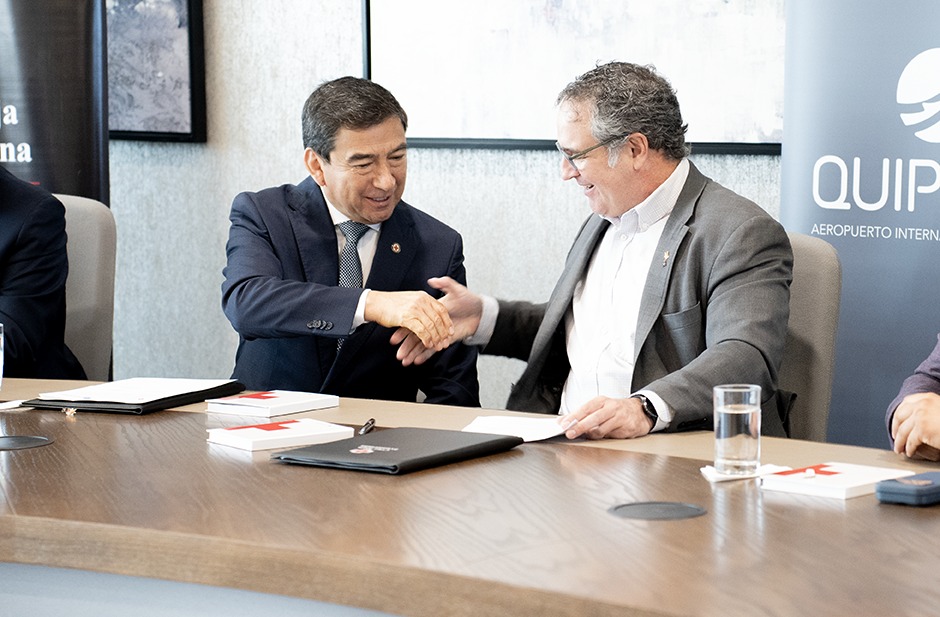
Quiport Corporation and the Ecuadorian Red Cross Society signed a Framework Agreement for Interinstitutional Cooperation with the objective of strengthening joint actions focused on humanitarian support, social management, the promotion of health and well-being, as well as coordinated care in situations requiring a coordinated response.
This agreement will allow for the development of plans, projects, programs, activities, and services of common interest, in accordance with the competencies of each institution. It also contemplates the possibility of coordinating awareness campaigns, humanitarian initiatives, social responsibility activities, training processes, research, events, and other actions that contribute to the well-being of the community.
As part of the agreement, both institutions may provide physical spaces, logistical support, dissemination of joint initiatives, and exchange of non-confidential information, always under prior coordination and in accordance with their internal procedures.
With this alliance, Quiport reaffirms its commitment to inter-institutional cooperation and to promoting actions that generate social value, especially for the benefit of people in vulnerable situations and in contexts of emergency or humanitarian need.

QUIPORT SHARED ITS PERSPECTIVE ON AIR CARGO AND TOURISM AT ANDEAN FORUMS
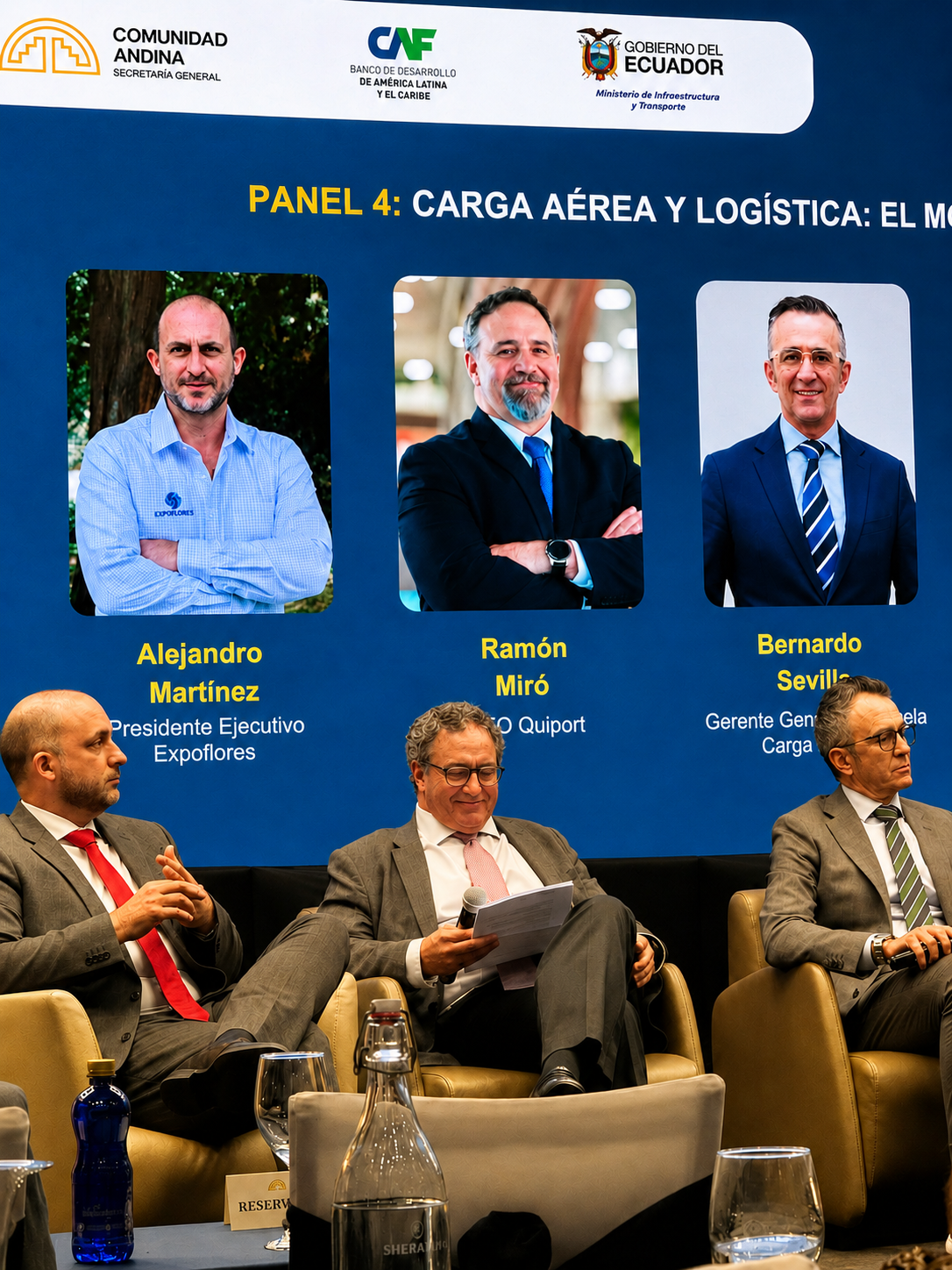
Quiport participated in two regional dialogues held in Quito, focused on analyzing the challenges of air transport, logistics, connectivity, and tourism management in the Andean region. Ramón Miró, President and CEO of Quiport, participated as a panelist at the IV Andean Air Transport Forum, while Santiago Andrade, Director of ITT, moderated a panel at the I Andean Tourism Forum.
Ramón Miró was part of the panel ‘Air Cargo and Logistics: The Engine of Regional Competitiveness,’ along with representatives from the public and private sectors linked to aviation, foreign trade, and the logistics chain. This panel addressed the importance of having prepared airport infrastructure, more efficient processes, and greater institutional coordination to respond to the growth of air cargo in the region.
During his presentation, Miró highlighted that Mariscal Sucre International Airport has strategic conditions for handling international cargo operations, including a dedicated cargo apron, parking positions for large aircraft, a 12,300 m² international terminal, and continuous 24/7 operation. He also emphasized the importance of continuing to strengthen the logistics chain with more agile processes.
“Air cargo is a decisive component for Ecuador’s competitiveness. Having prepared infrastructure is fundamental, but not sufficient: institutional coordination, predictable processes, and digital interoperability are also required for the logistics chain to operate more efficiently,” stated Ramón Miró.
The panel allowed for the analysis of key issues for Andean cargo hubs, such as warehousing, connectivity, digitization of procedures, risk management, and coordination with customs and health authorities. These factors are especially relevant for perishable and high-value products, whose competitiveness depends on efficient delivery times, operational safety, and continuity in the cold chain.
In parallel, Santiago Andrade moderated a panel focused on the role of technology in tourism management and enhancing the traveler experience, a key topic for an industry that demands more efficient, connected, and user-oriented solutions.
Quiport’s participation in these meetings provided a practical perspective on how airport infrastructure, logistics, connectivity, and innovation can become real drivers of development for Ecuador and the Andean region.