
Month: March 2026
Quiport consolidates its position among the country’s most responsible companies and reinforces Quito Airport’s leadership

Quiport consolidates its position among the country’s most responsible companies and reinforces Quito Airport’s leadership
- Maintains its presence in the Top 20 of the MERCO ranking
- Stands out in all three ESG pillars: environment (23), ethics and governance (19), and social impact (32)
- Sustainability is key to the operation of Quito Airport.
Quiport Corporation, the concessionaire of Mariscal Sucre International Airport, has once again ranked among the Top 20 of Ecuador’s 100 most responsible companies, compiled by MERCO.
This recognition solidifies Quito Airport’s position as one of the country’s leading examples of sustainable management, in an operation that never stops and connects Ecuador to the world every day of the year.
To achieve this ranking, Quiport maintained strong positions across the three pillars of environment, society, and governance (ESG): 23rd in environment, 32nd in internal matters, customers, and society, and 19th in ethics and governance.
“This recognition confirms that sustainability is part of how we operate. At Quiport, we embrace our responsibility to the environment, to people, to ethics, and to the development of the country,” stated Ramón Miró, the company’s president and CEO.
Recognition reflected in daily operations
Beyond the ranking, this recognition is reflected in the very operation of Quito’s airport.
In the environmental sphere, practices have been implemented to optimize resource use, manage water responsibly, and reduce emissions. The airport is the only one in the country that offsets its water footprint and maintains more than 150 hectares dedicated to biodiversity conservation within its grounds. This is complemented by its participation in initiatives such as Ecuador Carbon Zero and the achievement of Level 4+ ‘Transition’ in the Airport Carbon Accreditation program of the Airports Council International, among others.
In terms of governance, the operation is based on international standards, risk management, and a robust system of compliance, ethics, and transparency, which ensure safety, continuity, and trust.
Impact that transcends the airport
The impact also extends to people. More than 120 companies and institutions are part of the airport community, generating direct employment for more than 8,500 airport employees.
Since 2013, more than 195,000 people have benefited from social responsibility programs focused on education, health, recycling, volunteering, and support for nearby communities.
The focus is on generating long-term value.
This work has been supported by other accolades: Level 5 in passenger experience, 5-star certification in Latin America and the Caribbean, Level 2 in accessibility, and its inclusion in the ranking of the best companies to work for in Ecuador.
A ranking with a comprehensive perspective
The MERCO ranking is built using a multi-source methodology that combines the perceptions of different stakeholder groups with objective indicators. It includes evaluations from business executives, sustainability experts, financial analysts, journalists, and the general public, in addition to verified information from the companies themselves. This process allows for measuring performance on environmental, ethical, governance, and social impact criteria, under a comparative and audited approach, which lends technical rigor and credibility to the ranking.
More than a specific result, this recognition reflects a way of operating: integrating sustainability into every decision within a key infrastructure for the country.
Learn more about the ranking here:
https://www.merco.info/ec/ranking-merco-responsabilidad-gobierno-corporativo?edicion=2025
Quiport, among the best places to work in Ecuador according to Great Place to Work

Corporacion Quiport S.A. has been recognized as one of the best companies to work for in Ecuador in the 2026 Great Place to Work ranking. In this edition, the company achieved second place in the category of companies with 101 to 500 employees, consolidating its position as a leader in talent management and organizational culture in the country.
This recognition is based on a comprehensive evaluation process that combines employee feedback, gathered through the anonymous “Trust Index” organizational climate survey, with the qualitative “Culture Audit” analysis, reviewed by Great Place to Work, which examines the company’s practices, policies, and internal culture. The consistency between both components supports the achieved result.

The recognition reflects Quiport’s sustained commitment to building a strong work environment, aligned with its institutional purpose: “We do it well because we value life,” a principle that guides the management of its human team and is reflected in its airport operations.
Regarding this, Ramón Miró stated: “This recognition is the result of the work of our entire team and reflects Quiport’s ongoing commitment to its people. We firmly believe that caring for our employees, promoting their well-being, and fostering a positive work environment are key to providing quality service and generating a positive impact on our community.”
This recognition is not a final destination. It reinforces our responsibility to continue building, day by day, a workplace that generates value for people and for the country.
Aeromexico returns to Quito with four weekly flights
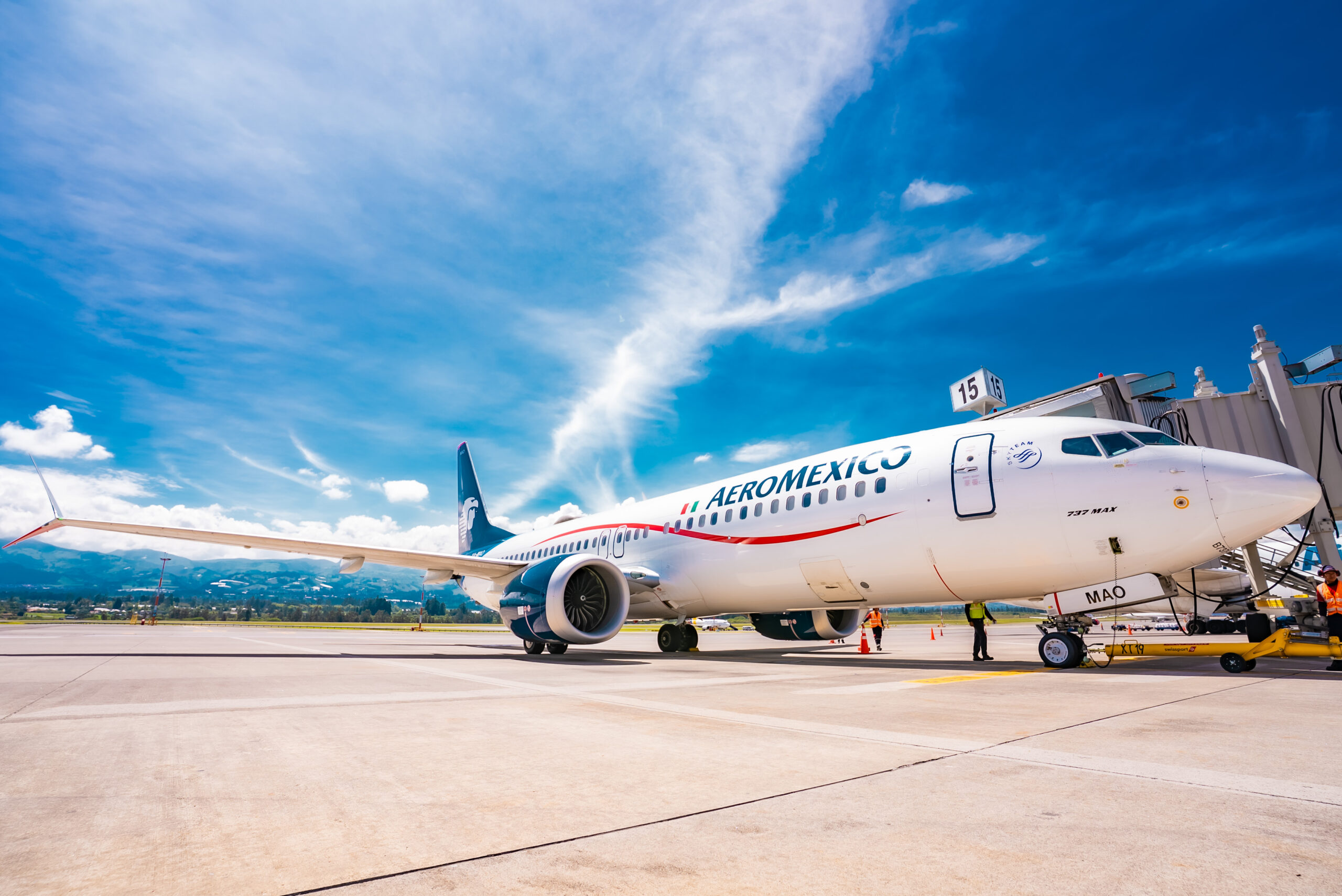
Aeromexico resumed its flights between Mexico City and Quito with the arrival last night of its Boeing 737 MAX 8, which will operate four weekly flights. The return flight departed this morning at 10:30 a.m., following a brief ceremony attended by Ramón Miró, President and CEO of Quiport, and Pepe Zapata, Vice President of Sales for North and Latin America at Aeromexico.
In this way, Quito’s airport regains one of its most popular direct flights, which, in addition to offering a nonstop travel option to Mexico City, provides the opportunity for efficient connections to multiple destinations in North America, Europe, and Asia. Through Aeroméxico’s domestic network, passengers can access cities such as Monterrey, Guadalajara, Cancún, Mérida, Querétaro, Huatulco, and Oaxaca, as well as international destinations like Montreal, Toronto, Amsterdam, London, Madrid, Paris, Rome, Tokyo, and Seoul.

Quiport’s president and CEO, Ramón Miró, emphasized the great importance of Aeroméxico’s presence at Quito’s Mariscal Sucre Airport. “Without a doubt, the operation of a regional and global giant like Aeroméxico in Quito allows us to expand the connectivity network to and from our airport through a reliable operator that offers not only a vast network of connections but also a great onboard experience for its passengers,” he said.
“At Aeromexico we continue working to expand our connectivity network to the
key destinations around the world, and in this sense, we are excited to land again in
Quito, thus reactivating the air bridge with Ecuador. With this service, Aeroméxico now has eight permanent routes and one seasonal route in South America, providing passengers in the region with an efficient connectivity option to more than 40 destinations in Mexico, 25 in the United States, 3 in Canada, 6 in Europe, and 2 in Asia.” Pepe Zapata, Vice President of Sales for North and Latin America at Aeromexico, commented.
The flights will operate on the following schedule:

During the event, Acting Vice Minister of Tourism María José Reshuan stated: “The inauguration of the direct flight between Quito and Mexico City not only brings our countries geographically closer, but also opens new opportunities to boost tourism, which is the fundamental pillar of our growing economy. Furthermore, it creates new opportunities to strengthen the cultural ties that bind us and have always bound us. In a constantly evolving global context, air connectivity is becoming a strategic factor for development.”
For his part, Etzon Romo, Secretary of Productive Economic Development, mentioned: “For us, it is fundamental to connect with the entire global commercial system, because we can be connected from Mexico, not only to the cities in the interior of that country, but also to Europe and Asia, and with this we can generate better productivity conditions for our industry, which is the one that generates employment for the inhabitants of the Metropolitan District of Quito.”
Quito Airport Leads South America as Best Regional Airport

- Chosen by Passengers: The recognition is based on the direct evaluation of millions of travelers worldwide.
- For the eleventh consecutive year, Quito remains the highest-rated airport among its peers in the region.
- The airport was also recognized as the Cleanest Airport in South America, and the Wyndham Quito Airport Hotel as the Best Airport Hotel in South America.
The airport was also recognized as the Cleanest Airport in South America, and the Wyndham Quito Airport Hotel as the Best Airport Hotel in South America.
Quito’s Mariscal Sucre International Airport has been recognized as the Best Regional Airport in South America, consolidating its leadership in the region and its position as a benchmark for airport quality.
This recognition marks a milestone: 11 consecutive years in which the Ecuadorian capital’s airport has maintained its position as the highest-rated among other airports in the region and its category, in a highly competitive environment.
In this edition of the awards, Quito Airport was also recognized as the Cleanest Airport in South America.
Awarded by Skytrax as part of the World Airport Awards, considered the most prestigious awards in the industry, these accolades are based on a comprehensive methodology that combines direct passenger feedback through an online survey with a detailed analysis of multiple aspects of the airport experience. This allows for the identification and recognition of airports that stand out for the quality of their services and infrastructure in the global airport industry.
“This achievement is the result of the collaborative work of the entire airport community. Every operation, every service, and every passenger interaction counts. This recognition motivates us to continue raising our quality standards,” stated Ramón Miró, President and CEO of Quiport, who also highlighted the fact that Quito Airport has received this award for 11 consecutive years. “This only demonstrates Quiport’s consistent commitment to the medium- and long-term management of excellence at Ecuador’s main airport,” he said.
Quito Airport has maintained this leadership thanks to management focused on operational efficiency, punctuality, safety, and a passenger-centric travel experience, complemented by a sustainability vision that integrates social and environmental criteria into its development.
In other categories, the airport ranked third in the Best Airport Staff in South America category and fourth among airports handling 5 to 10 million passengers annually worldwide.
Furthermore, the Wyndham Quito Airport was recognized as the Best Airport Hotel in South America, reinforcing the overall quality of the airport experience in Quito.
These accolades not only position the airport but also strengthen Ecuador’s image as a competitive and reliable destination for air travel and international tourism.
The complete list of winners is available at:
The route between Quito and Santiago, Chile, operated by LATAM, is resuming.
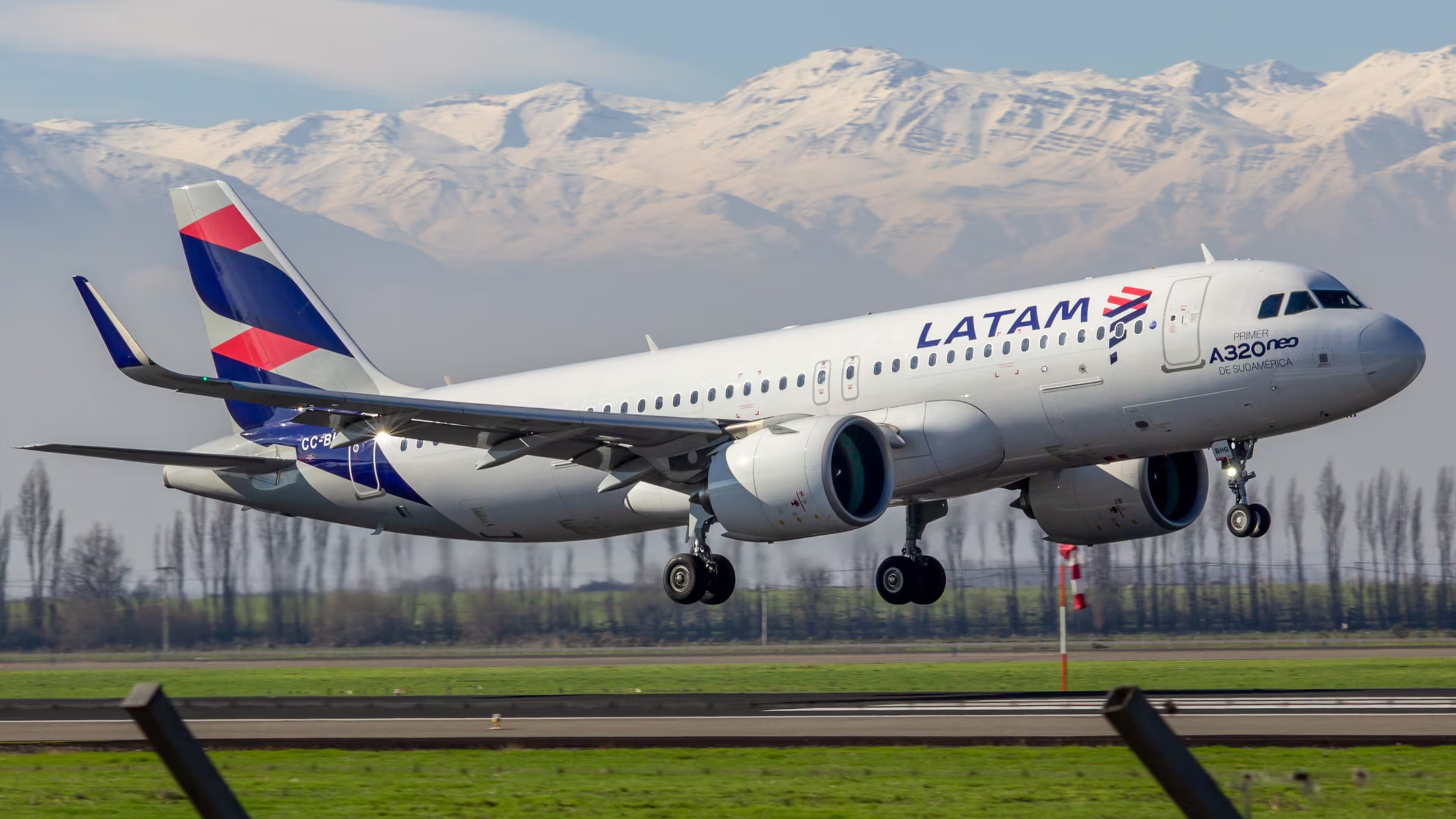
- With four weekly flights starting in October 2026, the airline offers 35,000 seats annually on this route.
- Through LATAM’s hub in Santiago, passengers traveling from Quito will be able to connect to more than 50 domestic and international destinations, particularly in South America and Oceania.
Direct flights between Quito and Santiago, Chile, operated by LATAM, will resume in October 2026, re-establishing a key connection for air transport in the region. The flight, which was inaugurated in April 2019, was suspended in 2020 due to the COVID-19 pandemic.
The resumption of this route is the result of collaborative work between the airline, Corporación Quiport—the concessionaire of Quito’s airport—and national and local authorities, in a coordinated effort to strengthen the country’s international connectivity. This return of the route also reflects the historical importance of the Quito-Santiago market, which has demonstrated sustained and strategic demand for passenger traffic development.
The service will operate four times a week with an estimated 35,000 seats available annually, providing passengers with a more efficient travel option. Thanks to this direct flight, travel times are expected to be reduced by 1.5 to 3 hours compared to itineraries requiring connections.
The route will be operated with Airbus A320neo aircraft, a state-of-the-art fleet that offers improved efficiency, with a reduction of approximately 20% in fuel consumption and CO₂ emissions compared to previous models, according to the manufacturer.
Ramón Miró, president and CEO of Quiport, stated: “This route represents an important step in strengthening Quito’s international connectivity. Santiago is a strategic hub in the region, and its reactivation opens new opportunities for tourism, business, and integration with key markets, in line with our vision of continuing to position the airport as a benchmark for connectivity in Latin America.”
Through LATAM’s hub in Santiago, passengers traveling from Quito will be able to connect to more than 50 domestic and international destinations, particularly in South America and Oceania, significantly expanding their travel options on a global scale.