
Month: May 2026
Safety as a Priority: Quiport Receives Two Awards for its Preventive Management at Quito Airport
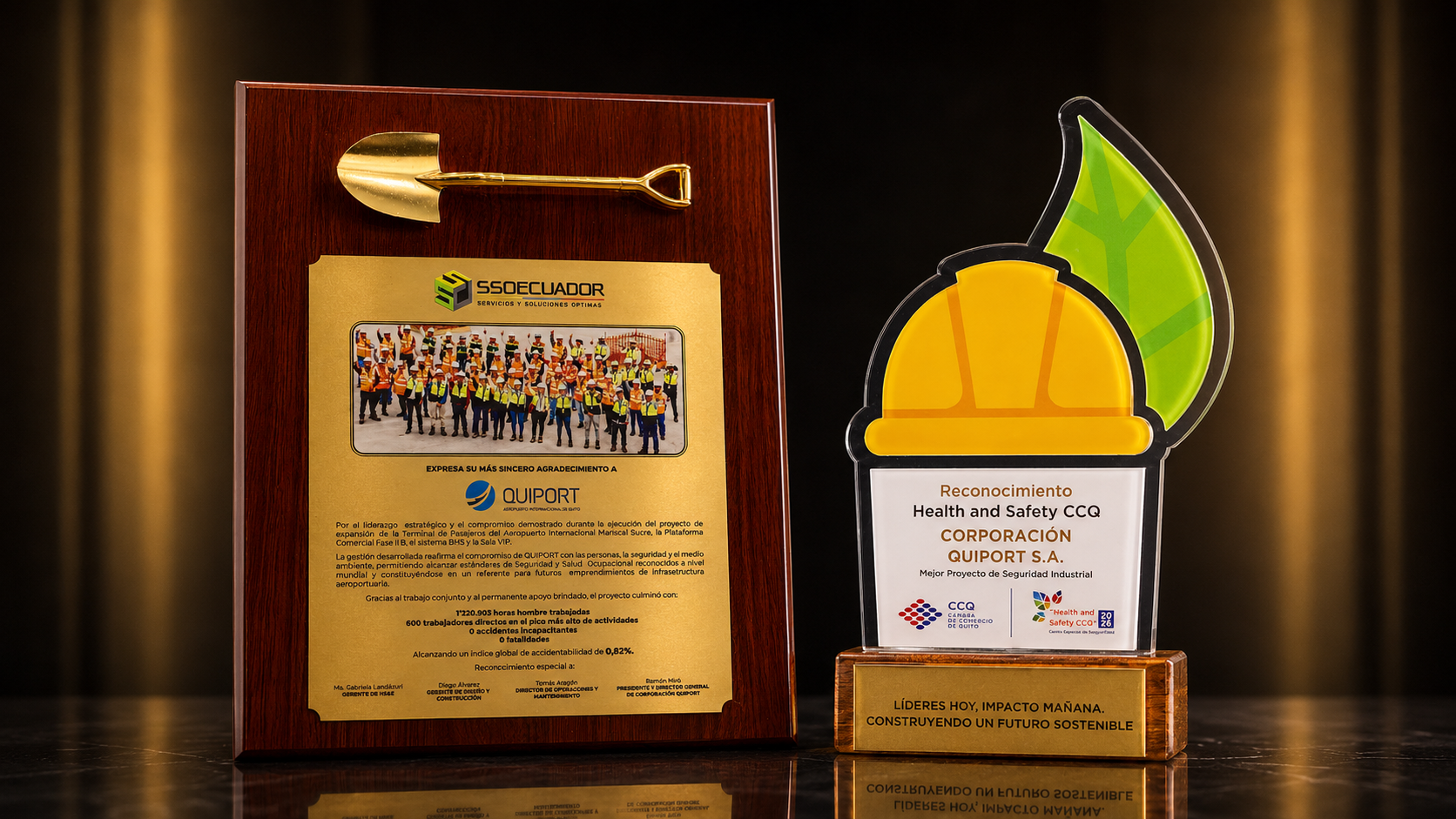
Safety is not just an operational requirement: it is a way to protect life, care for people, and guarantee the continuity of a key infrastructure for the country. With this approach, Quiport received two important awards in occupational safety and health, highlighting its leadership in risk prevention, operational safety, and a preventative culture within the airport sector.
The first award was granted by the Quito Chamber of Commerce, within the framework of the HEALTH AND SAFETY CCQ 2026 – SDG LEADERS Edition event, where Quiport was selected for its management of industrial safety, operational safety, and strengthening of preventative capabilities.cionado por su gestión en seguridad industrial, seguridad operacional y fortalecimiento de capacidades preventivas.

his award recognizes the Safety in Action initiative as the Best Safety and Health Project for promoting training sessions, prevention programs, risk management initiatives, and technical training in operational safety and occupational safety and health, aimed at operational personnel and strategic stakeholders at the airport.
Thanks to Seguridad en Acción (Safety in Action), the debate on the importance of these issues has become a permanent fixture among the various entities that make up the airport community, leading to improvements in overall performance indicators.
One example of this was the management implemented during the expansion of Quito’s Mariscal Sucre International Airport, completed in late 2025. During this process, the project maintained a record of zero serious accidents and zero loss of life, a result that reflects rigorous planning and a steadfast commitment to the safety of everyone involved.
In addition to this recognition, Quiport received an award from SSO Ecuador, which highlighted its strategic leadership and commitment during the execution of the Quito airport expansion project. This recognition reaffirms the company’s institutional focus on occupational safety and health, as well as its responsibility to people and the environment.

These awards demonstrate that Quiport’s preventative management goes beyond mere regulatory compliance. They represent a work culture based on prevention, technical coordination and care for life, fundamental principles for operating and developing airport infrastructure in a safe, responsible and sustainable manner.
Four New International Awards Solidify Quito Airport’s Position as a Global Leader
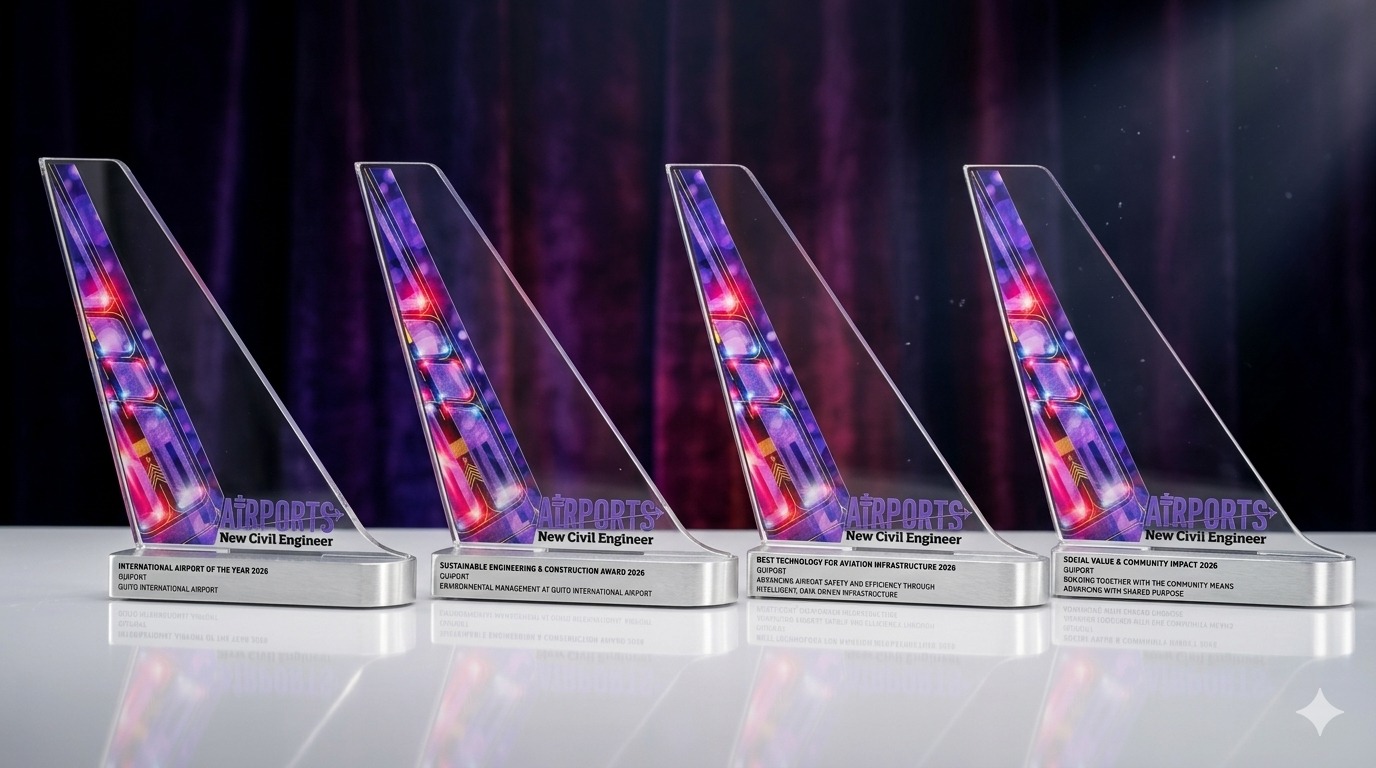
- The awards received at the 2026 NCE Airports Awards highlight Quiport’s leadership in airport management in sustainability, technological innovation, social impact, and operational excellence on a global scale.
- Los The awards are:
- Airport of the Year
- Best Technology for Aviation Infrastructure
- Social Value and Community Impact
- Sustainable Construction
Mariscal Sucre International Airport, managed and operated by Corporación Quiport, received four awards at the 2026 NCE Airports Awards, organized by New Civil Engineer, one of the most influential specialized publications in the global infrastructure, engineering, and construction sector.
In this edition, Quito Airport was nominated in seven categories and won four awards, competing against some of the world’s most prominent airports and airport projects. The awards are evaluated by a jury comprised of experts and senior representatives from the international airport, infrastructure, and construction industries.

The top award received was Airport of the Year, a category that recognizes the airport with the most outstanding performance globally. The judges highlighted Quiport’s ability to achieve solid economic growth while maintaining a strong commitment to environmental, social, and governance (ESG) objectives, sustainable development, and reducing its impact on the local community. They also emphasized the balance between airport expansion and maintaining a high-quality passenger experience.

In the Best Technology for Aviation Infrastructure category, the airport was recognized for its digital transformation and the integration of operational safety, environmental management, health systems, artificial intelligence, and predictive analytics within a unique airport management ecosystem. The jury emphasized that this platform not only strengthens safety and operational efficiency but also reflects a true cultural shift within the organization, promoting more proactive and integrated decision-making in both airside and landside operations.

Quiport also received the Social Value & Community Impact award, which highlights high-impact social and community initiatives. The judges underscored the breadth and scope of the company’s programs in areas such as well-being, capacity building, economic empowerment, and environmental management. The award particularly highlighted how social value has been incorporated as a cross-cutting strategic priority across all airport operations, as well as the strength of community partnerships and the tangible impact achieved on the beneficiary populations.

Finally, the Sustainable Engineering & Construction award recognized the comprehensive sustainability management implemented at Quito Airport. The jury recognized the candidacy as a global benchmark for integrating climate action, biodiversity conservation, water neutrality, the circular economy, and operational resilience within airport management. It also highlighted the strength of its governance standards, including ACA Level 4+ accreditation and the early adoption of international frameworks such as the Task Force on Climate-related Financial Disclosures (TCFD), focused on the disclosure of financial risks associated with climate change; and the Task Force on Nature-related Financial Disclosures (TNFD), focused on risks and opportunities related to nature and biodiversity.
Ramón Miró, President and CEO of Quiport, stated: “It is an honor to have been nominated in various categories and to receive four international awards in an initiative that includes renowned airports from around the world. These awards reflect a management approach that we have consistently built and strengthened over several years, integrating sustainability, innovation, operational efficiency, and commitment to the communities. Undoubtedly, Quiport’s long-term vision has generated results and motivates us to continue raising the standards of Quito’s airport. This airport belongs to Ecuador, and everything we have achieved has been done with Ecuadorian talent.”
These results reflect a long-term vision championed by Quiport since the airport’s construction began in 2006, when the comprehensive social and environmental management plan was developed. This plan has guided the airport’s operations in recent years. This strategy has been consistently and steadily strengthened, as evidenced by the numerous national and international awards the airport has received in various management areas.
World Recycling Day: the sustainable actions promoted by Quiport at Quito airport
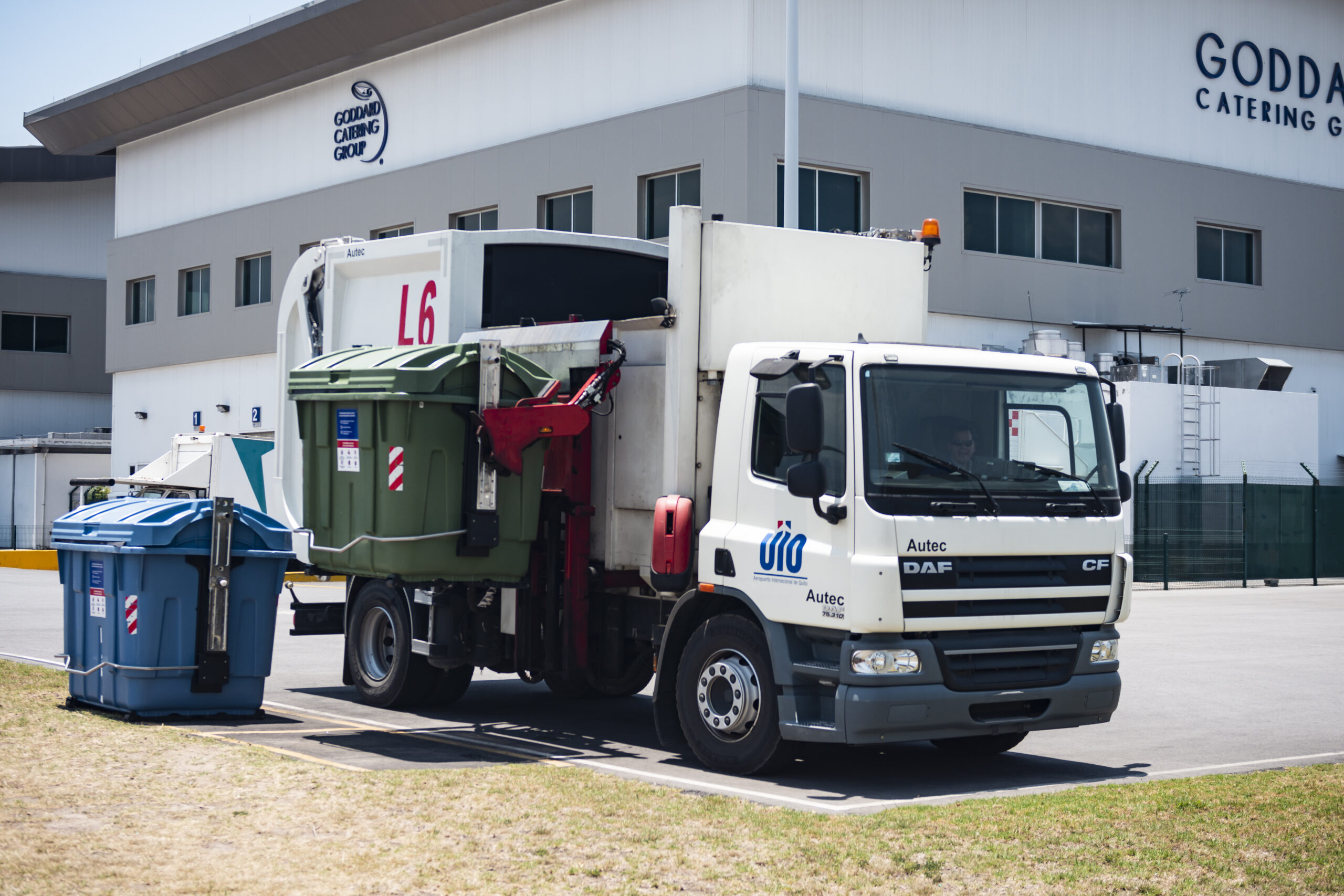
Every day, thousands of people pass through Quito’s Mariscal Sucre International Airport. And while flights take off, passengers arrive, and tons of cargo are moved, another less visible but increasingly important process is also taking place: transforming waste into new opportunities.
On World Recycling Day—a date that also promotes the reduction and reuse of materials as part of more responsible waste management—Quiport Corporation shares several initiatives that have made Quito’s airport a regional leader in sustainability.
A Waste Utilization Model
During 2025, Quiport recovered 428.06 tons of waste through recycling, composting, biodigestion, energy recovery, and recovery processes, strengthening a circular economy model within the airport.
Of that total, 170.39 tons were non-hazardous waste such as cardboard, paper, plastic, and glass, materials that were reintroduced into new production cycles instead of becoming waste.

From Organic Waste to Compost and Other Byproducts
A significant part of this work involves the organic waste generated by various restaurants, shops, and other businesses operating within the terminal.
Currently, the airport utilizes 100% of this waste through solutions implemented on its premises, including 12 composters and 5 biodigesters. These systems transform organic waste into compost and other useful byproducts.
The model also includes the responsible management of hazardous waste, much of which is sent to processes that ensure environmentally sound disposal.
Recycling Can Also Generate Social Impact
Quiport’s sustainability strategy is not limited to recycling alone. The airport has a waste management center operated by a community-based company, an initiative that also creates opportunities for local stakeholders involved in environmental management and the circular economy.
In addition, there is Compartamos, a social responsibility program that integrates several airport companies to give a second life to objects and materials that can still be useful.
Desks, furniture, chairs, tiles, office supplies, construction materials, and kitchen equipment from renovations, refurbishments, or rebranding projects, all in good condition, are donated to schools, community organizations, and public institutions near the airport, many of which lack sufficient resources to improve their facilities.
Even the milled material generated during the airport runway repaving work has been donated to nearby communities, which have used it to improve secondary and tertiary roads, promoting the reuse of materials and generating direct benefits for the community.
From Waste to New Learning Spaces
As part of an initiative promoted by Quiport, schools in communities near the airport have built eco-classrooms using materials from the Compartamos program.
For these projects, Quiport has also donated eco-blocks made in part with ash from the airport’s incinerator.
The initiative promotes the reuse of materials and demonstrates how waste can be transformed into useful solutions for communities and education.
A More Efficient and Sustainable Airport
Quiport’s sustainability strategy also incorporates actions focused on reducing resource consumption within airport operations.
One example is the recent expansion of Mariscal Sucre International Airport, developed under sustainable construction standards and which obtained EDGE certification, an international recognition that evaluates efficiency and sustainability criteria in buildings.
In addition to this expansion, the airport is implementing ongoing measures to optimize water and energy consumption throughout the terminal and administrative offices. These include water-saving and control systems in restrooms, the use of high-efficiency LED lighting, and the rationalization of the air conditioning system, whose operation is adjusted according to the outside temperature and passenger flow in the pre-boarding areas.
A Leading Airport in Sustainability
All these actions are part of a broader environmental strategy that has positioned Quito’s airport as a regional leader in airport sustainability.
In 2024, Mariscal Sucre International Airport became the first airport in Latin America and the Caribbean to achieve Level 4+ Transition certification from the Airport Carbon Accreditation program, an international recognition that supports efforts to reduce emissions and avoid
Quito Airport Breaks Record in Flower Exports for Mother’s Day and Rises to Fourth Place in Air Cargo in Latin America
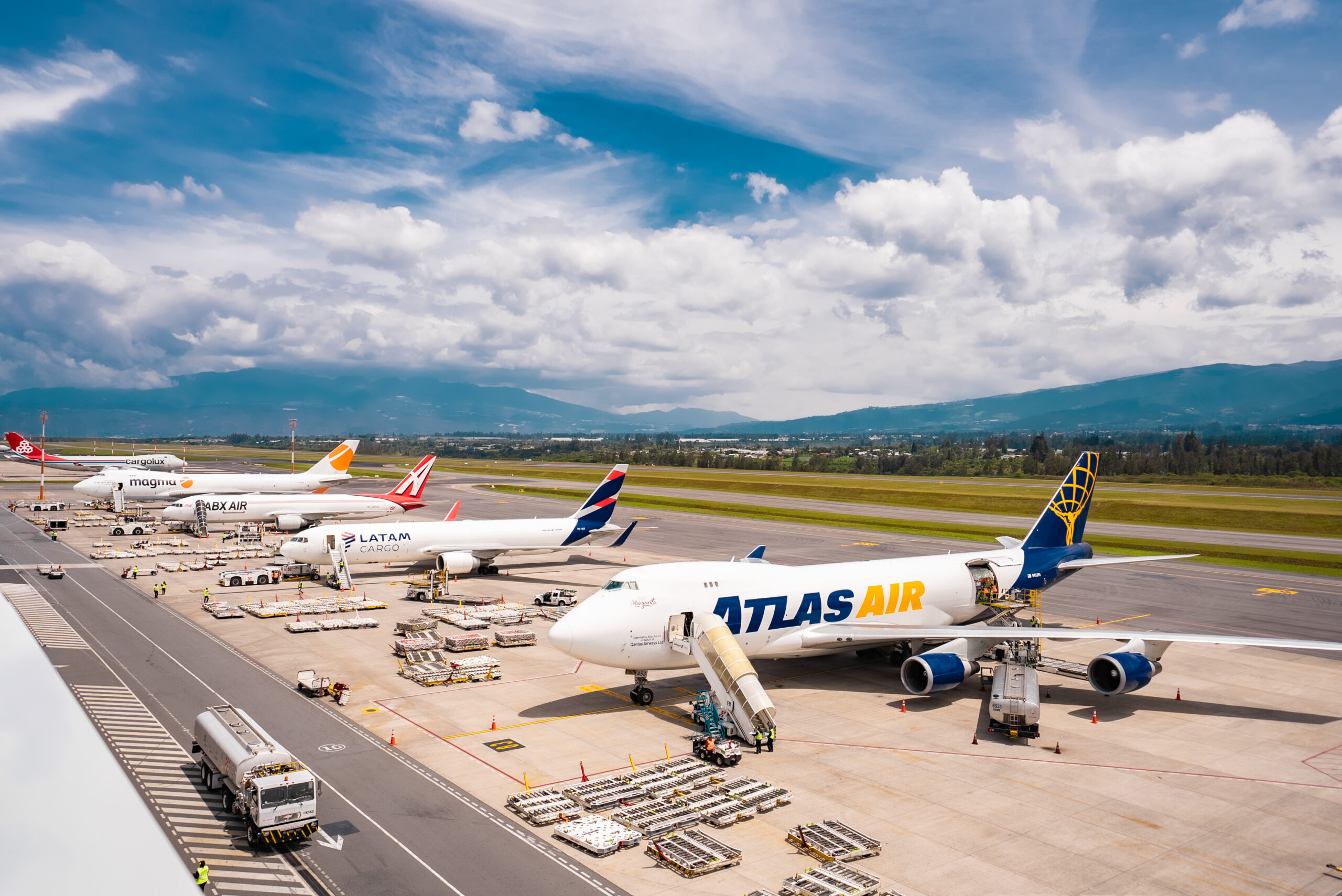
Flower exports for Mother’s Day from Quito’s Mariscal Sucre International Airport in 2026 grew by 16% compared to the 2025 season, solidifying this date as the second most important for flower exports by air, after Valentine’s Day.
According to data collected by Corporación Quiport, between April 16 and May 6—a period of 21 days—approximately 24,800 metric tons of flowers were exported, a figure that surpasses the 21,300 metric tons exported from Quito’s airport in 2025.
The peak day for flower exports during the 2026 Mother’s Day season was April 29, with a shipment of 1,641 metric tons, 4.1% more than the peak day of the 2025 season.
The volume exported on Mother’s Day is 15% lower than the volume exported on Valentine’s Day; however, this ratio is better than that recorded in 2025, when the Valentine’s Day volume exceeded that of Mother’s Day by 25%, indicating that the gap between the two dates is narrowing.
For Ramón Miró, president and CEO of Corporación Quiport, the growth during the Mother’s Day season is a sign of the increasing cargo activity at Quito’s airport. “Since 2022, Quito’s airport has been surpassing its historical records year after year, positioning Quito as one of the most important air cargo hubs in Latin America and the Caribbean, boosting exports and contributing to the development and economic growth of the city and the country,” Miró stated.
Indeed, Quito’s airport climbed from fifth to fourth place in the Latin American and Caribbean air cargo ranking, according to the most recent report from the Airports Council International Latin America and the Caribbean (ACI-LAC), published on Wednesday, May 6.
Quito Airport, managed and operated by Corporación Quiport, is ranked only below El Dorado Airport in Bogotá, Colombia, Guarulhos Airport in São Paulo, Brazil, and Felipe Ángeles Airport in Mexico City, Mexico, and surpasses Arturo Merino Benítez Airport in Santiago, Chile, and other major airports in the region.