
Author: Rafael Orellana
Quito Hosted the ACI-LAC Operational Safety Committee Annual Meeting and its First Airport Safety Workshop
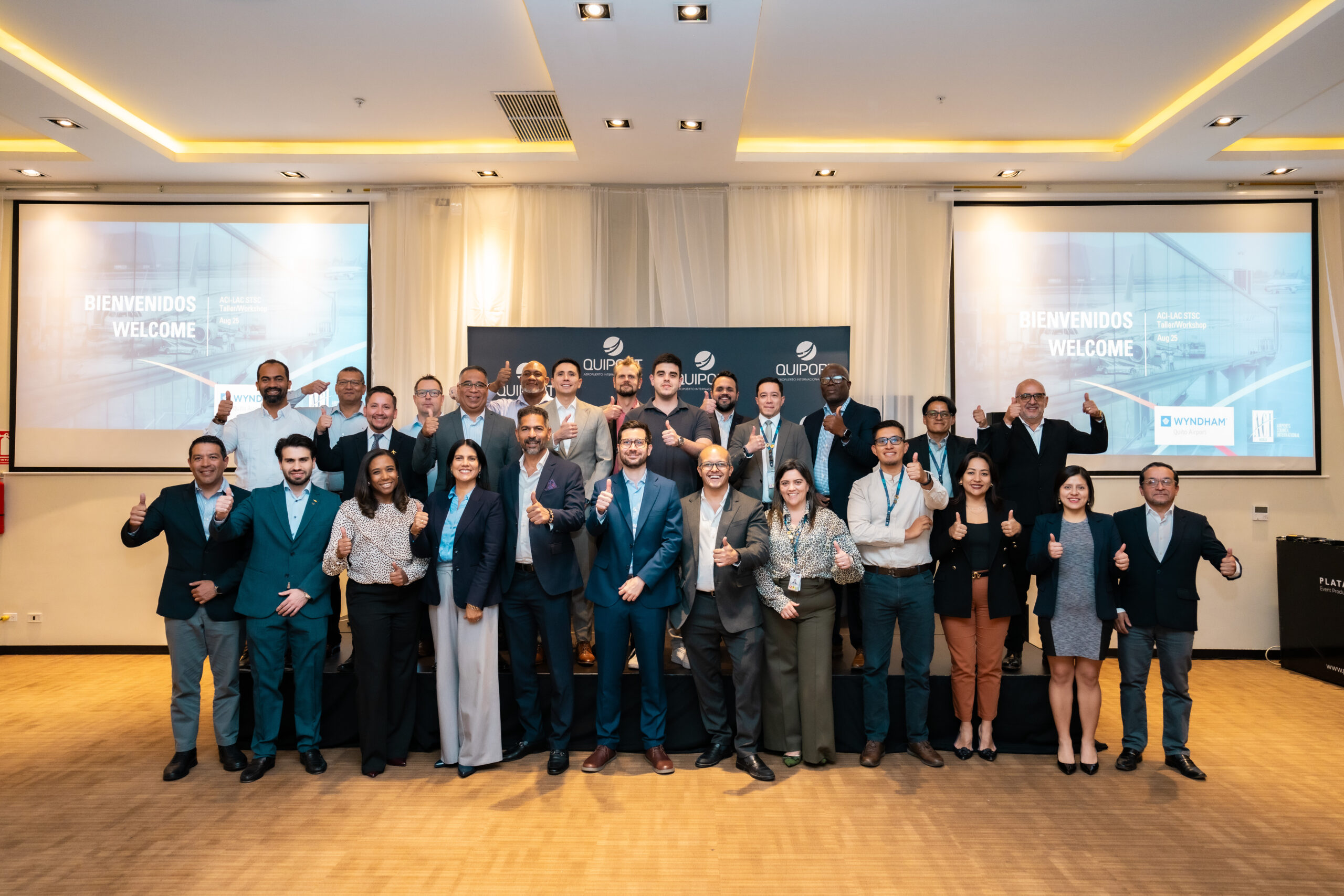
From August 25 to 27, Quito’s Mariscal Sucre International Airport hosted the 2026 ACI-LAC Operational Safety Committee Annual Meeting, a technical exchange forum that brought together specialists and representatives from the airport sector to share knowledge, experiences, and best practices in operational safety.
This edition was attended by 28 representatives from 11 countries, linked to more than 50 airports in the region. Leading the event was David Almeida, Quiport’s Operational Safety Manager and President of the ACI-LAC Operational Safety Committee. The presence of specialists from different countries and airports enriched the exchange of experiences and best practices regarding the main challenges of operational safety.
The agenda also included the first Airport Safety Workshop organized by the Committee, an initiative driven by its own members to broaden the exchange of knowledge and experiences on the main operational safety challenges facing the airport industry.
“Operational safety knows no borders or individual airports; it is a collective responsibility that requires cooperation, knowledge, and a culture of continuous improvement,” said Ramón Miró, President and CEO of Corporación Quiport, during his welcoming remarks to the participants.
Throughout the sessions, topics such as the evolution of Safety Management Systems (SMS) towards data-driven management, safety during construction work, runway risk management, and incursion prevention were addressed.
The event agenda also included aircraft recovery preparedness, the analysis of anti-drone solutions for airports, and the review of new guidelines and deliverables from the Operational Safety Committee.
The ACI-LAC Operational Safety Committee holds this meeting annually, and as part of this new phase of technical exchange, future editions of the workshop are planned to take place at different member airports, strengthening the direct exchange of experiences and best practices among its members.
Hosting the 2026 ACI-LAC Operational Safety Committee Annual Meeting and the first edition of its Airport Safety Workshop strengthens Quito Airport’s participation in international technical cooperation forums and contributes to the development of joint solutions to current and future operational safety challenges.
Ramón Miró Recognized Among the TOP 100 CEOs + STAFF 2026
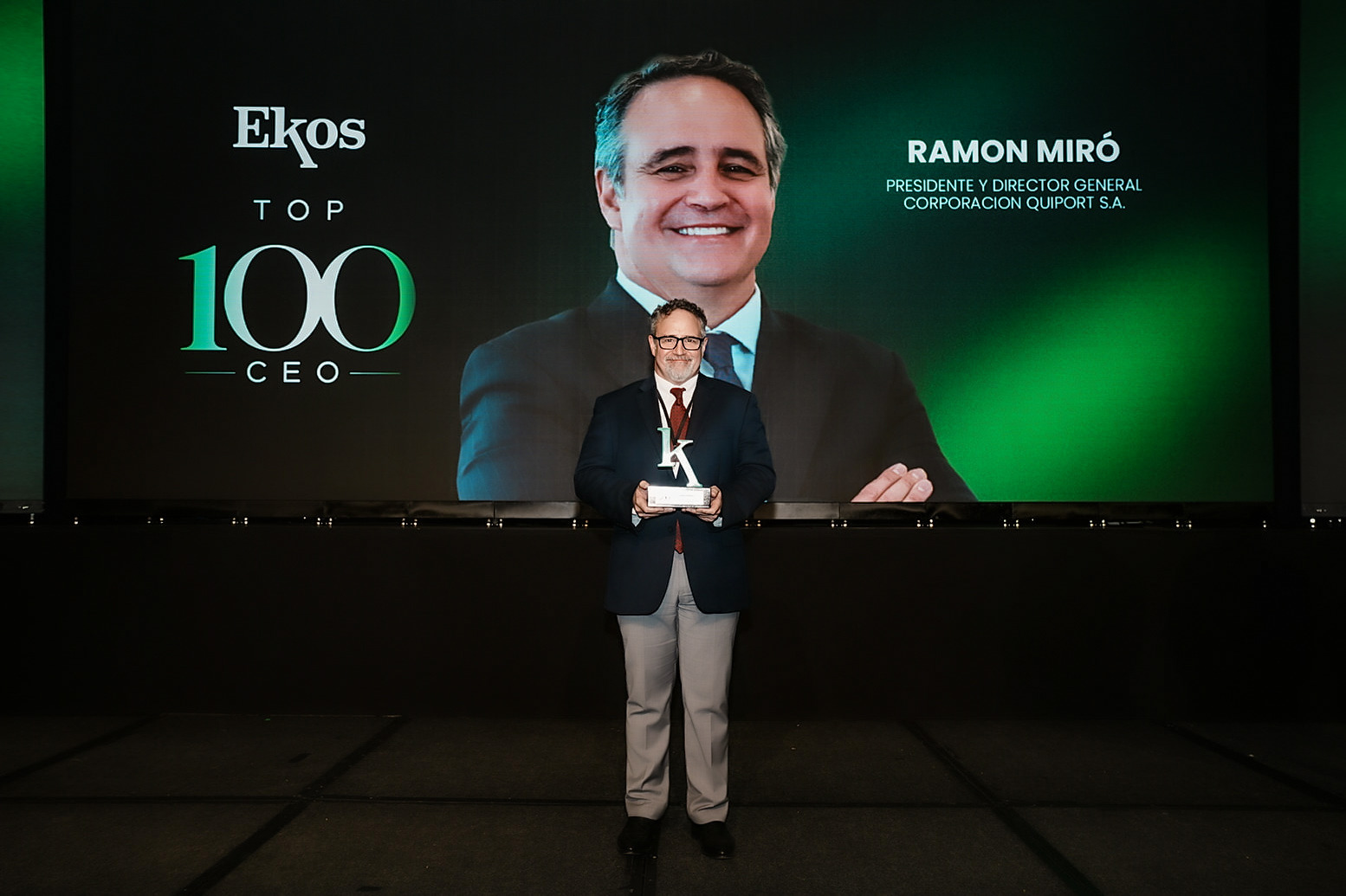
Ramón Miró, president and CEO of Corporación Quiport, has been honored with the TOP 100 CEOs + STAFF 2026 Recognition from Grupo Ekos, which highlights business leaders whose management is linked to the sustained performance of their organizations.
The recognition was presented during Guayaquil Business & Sustainable 2026, an event held on August 27 in Guayaquil that brought together leaders and senior executives to discuss the trends shaping competitiveness, innovation, and business sustainability in Ecuador.
Unlike recognitions based solely on individual assessment, the selection of the TOP 100 CEOs + STAFF is based on an analysis of business results. The methodology developed by Ekos Research considers official financial information from the 2022–2024 period and evaluates four dimensions: business growth, size, profitability, and tax contribution.
In this context, the award given to Ramón Miró recognizes a management style that is reflected in the performance of Corporación Quiport and is built on the ongoing contributions of the people who make up the organization.
“This recognition reflects much more than individual achievements. Quiport’s results are a consequence of the work of a committed team, consistent decisions, and a long-term vision for Quito’s airport. Receiving this award is also an opportunity to recognize those who make our operations possible every day,” said Ramón Miró.
Quiport Among the Top 100 Organizations in Ecuador for its Contribution to the SDGs
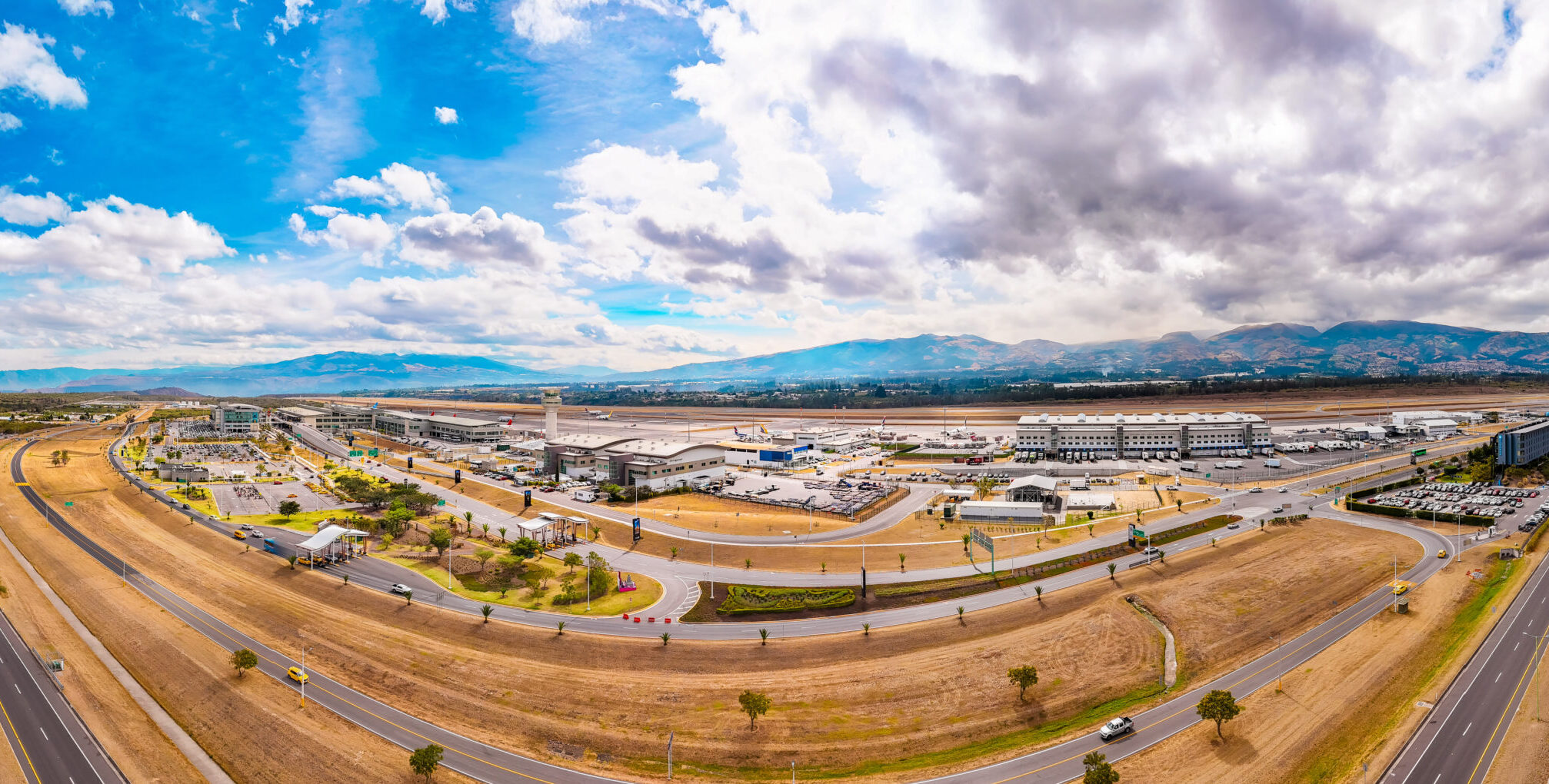
Airport management is also measured by what happens beyond its runways and terminals. The way it manages its resources, interacts with communities, manages its environmental impacts, and makes long-term decisions is part of an operation increasingly linked to the challenges of sustainable development.
From this perspective, Corporación Quiport was included among the 100 organizations that contribute most to sustainable development in Ecuador, an award presented during the third edition of the SDG Leaders Summit 2026, organized by Vistazo magazine.
The meeting, held on August 19 at the Hilton Colón Hotel in Guayaquil, brought together representatives from the business, trade, and scientific sectors, as well as specialists and stakeholders from different fields, to analyze Ecuador’s progress in achieving the Sustainable Development Goals (SDGs) and the actions that require greater attention leading up to 2030.
The selection of the 100 recognized organizations was based on a methodology developed by YPSILOM, a consulting firm specializing in sustainability, which allowed for the analysis of business contributions to the various areas related to the SDGs.
“Sustainability only makes sense when it ceases to be a concept separate from operations and becomes part of the decisions made every day. At an airport, every improvement in resource use, in our relationship with communities, or in how we manage our impacts can generate results that transcend the infrastructure itself,” said Ramón Miró, president and CEO of Corporación Quiport.
During the SDG Leaders Summit, challenges related to biodiversity, climate change, education, and social development were also addressed, as well as the role the private sector can play in accelerating the remaining progress of the 2030 Agenda.
This recognition comes at a time when the debate is no longer solely about which companies talk about sustainability, but rather which can demonstrate how they integrate it into their operations. For Quiport, that difference is built into the daily decisions that shape the airport’s management.
Quiport Recognized Among the Country’s Top 100 Organizations for Its Contribution to the SDGs
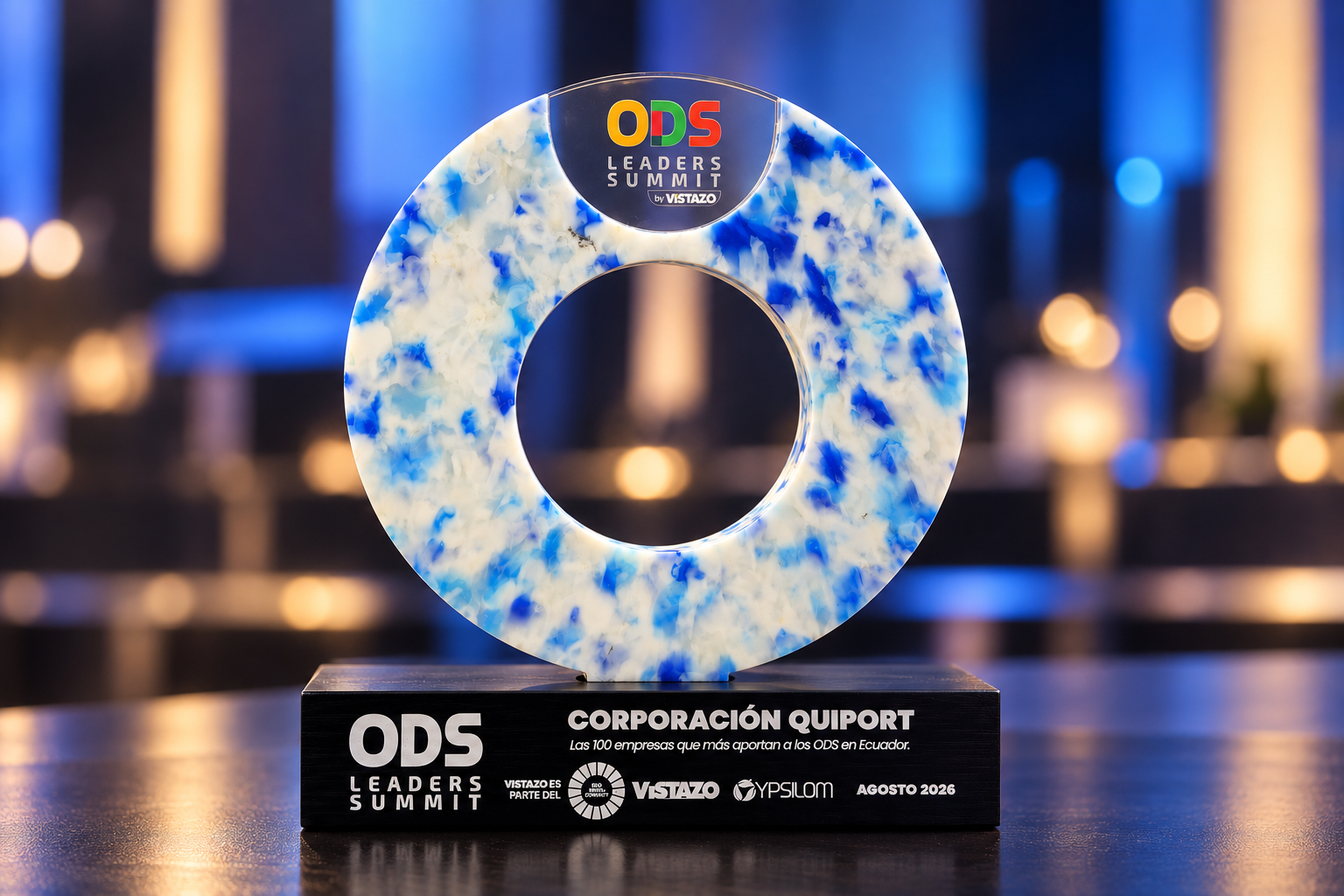
Airport management is also measured by what happens beyond its runways and terminals. How an airport manages its resources, engages with communities, handles environmental impacts, and makes long-term decisions is part of an operation increasingly linked to the challenges of sustainable development.
With this in mind, Corporación Quiport was named one of the top 100 organizations contributing to sustainable development in Ecuador—an honor presented during the third edition of the SDG Leaders Summit 2026, organized by Vistazo magazine.
The event, held on August 19 at the Hilton Colón Hotel in Guayaquil, brought together representatives from the business, industry association, and scientific sectors, as well as specialists and stakeholders from various fields. They gathered to analyze Ecuador’s progress in meeting the Sustainable Development Goals (SDGs) and to identify actions requiring greater attention as the 2030 deadline approaches.
The selection of the 100 recognized organizations was based on a methodology developed by YPSILOM, a sustainability consultancy, which allowed for an analysis of corporate contributions across various areas linked to the SDGs.
“Sustainability makes sense when it ceases to be a concept separate from operations and becomes part of everyday decision-making. At an airport, every improvement in resource use, community relations, or impact management can generate results that extend far beyond the infrastructure itself,” noted Ramón Miró, President and CEO of Corporación Quiport. The SDG Leaders Summit also addressed challenges related to biodiversity, climate change, education, and social development, as well as the role the private sector can play in accelerating progress toward the 2030 Agenda goals.
This recognition comes at a time when the conversation has shifted from simply discussing which companies talk about sustainability to identifying those that can demonstrate how they integrate it into their operations. For Quiport, that distinction is forged through the day-to-day decisions that shape the airport’s management.
Quito Airport Celebrates One Year as Part of Sunflower and Strengthens its Accessibility Culture

Quito’s Mariscal Sucre International Airport is celebrating its first year as part of the international Hidden Disabilities Sunflower program, an initiative that allows people with non-visible disabilities to voluntarily and discreetly identify themselves with a neckband featuring sunflowers.
The distinctive neckband, which is provided free of charge at the airport, allows staff to communicate that a person may require more time, clearer explanations, or support during certain moments of their journey. Since the program’s implementation in August 2025, 621 passengers have requested and received their Sunflower neckband.
The initiative originated at Gatwick Airport in the United Kingdom and is now part of an international network encompassing more than 325 airports and 31 airlines, according to official information from Hidden Disabilities Sunflower.
The incorporation of Sunflower represents another step in the work that Quito Airport has been developing to consolidate a culture of accessibility. In 2024, it achieved Level 1 of the ACI Airport Accessibility Accreditation and, in January 2026, obtained Level 2, becoming the first airport in Ecuador to do so.
A Committed Airport Community
One of the program’s pillars has been the involvement of the companies and institutions that make up the airport community. Airlines, public entities, concessionaires, and service companies have access to materials to keep their teams trained on the operation of Sunflower and how to assist those who use the distinctive symbol.
Additionally, Quiport holds an annual training session for new members of the airport community. In 2026, approximately 140 employees from different companies participated in this session, reinforcing their knowledge about non-visible disabilities and the Sunflower program.
“The 621 neck braces distributed during this first year represent people who found a simple way to communicate a need that isn’t always visible. Sunflower demonstrates that accessibility is built in every interaction and that the commitment of the entire airport community is fundamental to offering a more understanding, respectful, and inclusive travel experience,” said Ramón Miró, President and CEO of Quiport.
On the program’s first anniversary, Quiport thanks the entire airport community for its participation and commitment. The implementation of Sunflower has shown that advancing accessibility requires not only infrastructure and processes, but also awareness, knowledge, and a different way of understanding the needs of each passenger.
Quiport will continue to strengthen this work together with the organizations that operate at the airport to continue building an increasingly accessible and inclusive travel experience.
🌻Learn more about the program here: https://www.aeropuertoquito.aero/aeropuerto-de-quito-se-une-al-programa-sunflower-para-ofrecer-una-atencion-mas-inclusiva-a-pasajeros-con-discapacidades-no-visibles/
Quiport: The Highest-Ranked Ecuadorian Company on the Great Place to Work® Latin America 2026 List
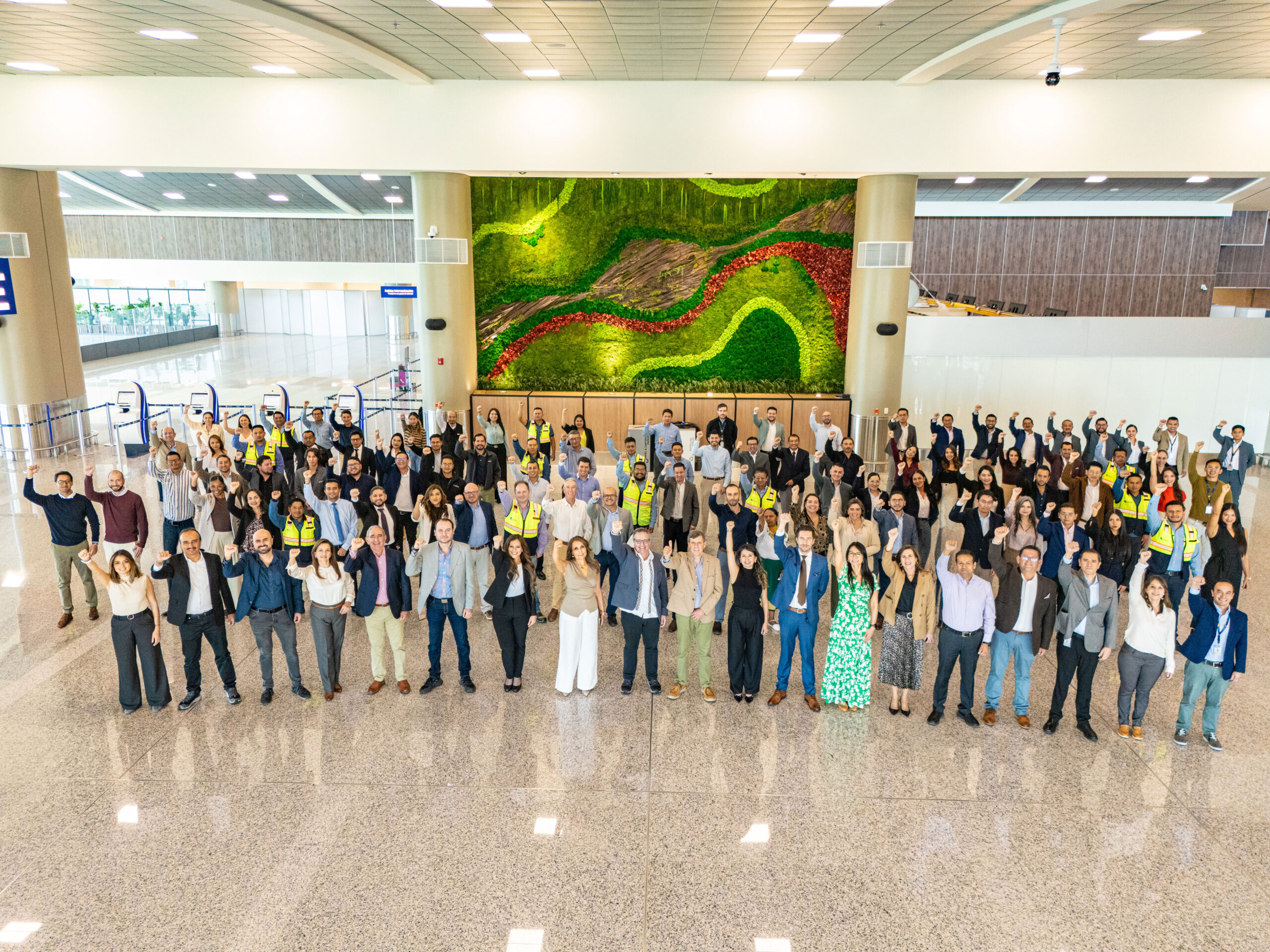
Corporación Quiport secured 17th place among the Best Places to Work™ in Latin America 2026 in the Small and Medium-Sized Enterprises category, establishing itself as the highest-ranked Ecuadorian company in its category on the Great Place To Work® regional list.
This result also marks significant progress for the company, which climbed 55 spots compared to the previous edition. This advancement reflects Quiport’s sustained efforts to strengthen an organizational culture rooted in trust, respect, collaboration, and development opportunities for its employees.
“This recognition belongs to everyone who makes Quiport what it is. It fills us with pride because it reflects how we work, how we look out for one another, and how we live out our purpose: ‘We do it right because we value life.’ Reaching this position motivates us to continue building—together—a place where people can grow, contribute, and feel part of something important,” said Ramón Miró, President and CEO of Corporación Quiport.
For the company, the employee experience is a fundamental element of its management. Having committed teams aligned with a common purpose contributes to efficient operations and delivers a better experience for passengers, users, and the airport community.
The Great Place To Work® ranking is based on an analysis of workplace programs and direct feedback from employees across thousands of organizations throughout Latin America.
The 17th-place ranking in 2026 and the 55-spot climb since 2025 provide fresh momentum for Quiport to keep strengthening an environment where people feel valued, find opportunities for growth, and contribute to the organization’s success.
A recognition built upon the experience and commitment of the people who make Quiport what it is every day.
Quiport Achieves ISO Certification for Passenger Terminal HVAC Energy Management
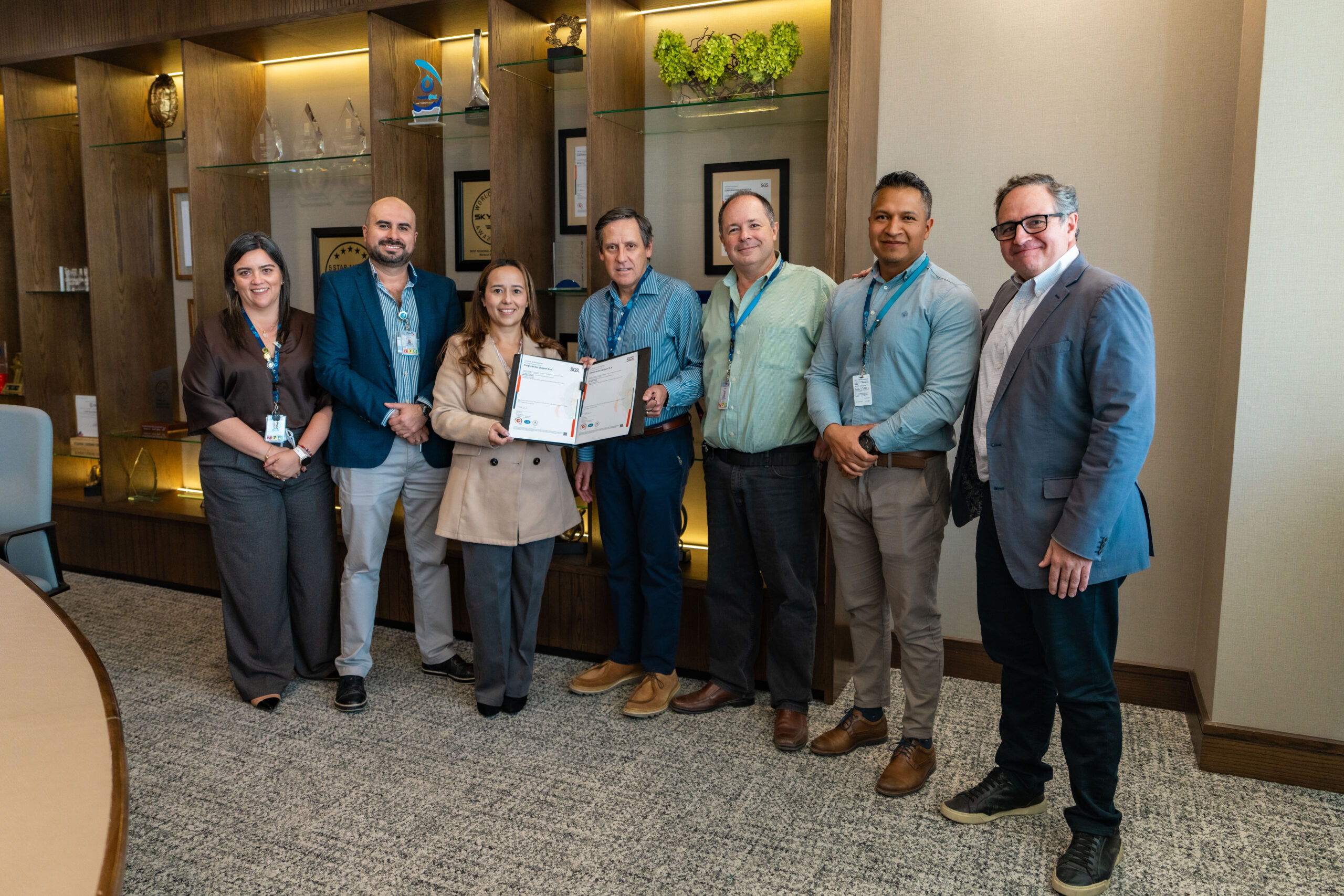
Quiport has obtained ISO 50001 certification for energy management, marking the fourth international standard incorporated into its management system at Mariscal Sucre International Airport.
The scope of this certification focused on the Passenger Terminal’s HVAC (heating, ventilation, and air conditioning) system, with the aim of optimizing energy consumption and moving toward more efficient and sustainable operations.
As part of the process, the company enhanced its energy consumption measurement and analysis capabilities to manage system operations with greater precision and make data-driven decisions.
Implemented measures include adjusting equipment start-up and shutdown schedules based on passenger flow, as well as the future integration of technologies and sensors to monitor area occupancy and adjust climate control to real-time needs. This approach ensures that only the necessary amount of energy is used, without compromising passenger comfort or experience.
Information for Better Decision-Making
A key outcome of this process is the availability of improved tools to measure, analyze, and evaluate the HVAC system’s energy performance.
Historical consumption records, combined with operational and passenger movement data, allow the company to understand demand fluctuations, set targets, and verify the results of implemented actions.
The goal is not merely to reduce consumption but to use energy more efficiently by aligning equipment operation with actual terminal conditions and leveraging technology to enhance performance.
A Vision of Continuous Improvement
Adopting this standard establishes an ongoing methodology for identifying new opportunities, setting measurable goals, and tracking results.
With this fourth ISO certification, Quiport reinforces its commitment to energy efficiency, sustainability, and the responsible use of resources at Mariscal Sucre International Airport. The company will continue to evaluate new opportunities to improve the energy performance of the HVAC system and support airport operations with a responsible, long-term vision.
Quito Airport Strengthens its Commercial Offerings with the Expansion of Duty Free Stores and the Arrival of Polo Ralph Lauren and Adidas

The renovation increased Attenza’s commercial space at Mariscal Sucre International Airport by more than 50%, bringing the total to ten stores spread across 2,156 square meters.
Mariscal Sucre International Airport inaugurated the expansion and renovation of Attenza Duty Free stores, located in the international arrivals and departures areas, as well as the new Polo Ralph Lauren and Adidas boutiques.
The project increased Attenza’s commercial space by more than 50%, now reaching 2,156 square meters distributed across ten stores. The spaces feature a modern design, more intuitive layouts, and environments designed to facilitate passenger interaction with the different brands.
The offerings include perfumes and beauty products, wines and spirits, premium chocolates, accessories, fashion, and travel items. The addition of Polo Ralph Lauren and Adidas expands the shopping options available to international travelers passing through the airport terminal.
“This investment reflects confidence in Quito Airport, its growth, and the potential of the Ecuadorian market. The expansion not only modernizes our commercial offerings but also strengthens Quito’s position as a gateway to Ecuador, with service standards comparable to the best airports in the region,” stated Ramón Miró, President and CEO of Corporación Quiport.

The alliance between Quiport and Attenza began in February 2013 with the opening of the new Mariscal Sucre International Airport in Tababela. Since then, both organizations have worked together on the renovation of commercial spaces, the addition of international brands, and the development of services aimed at improving the passenger experience.
“We are very happy to formally inaugurate these new spaces and to continue working together with Quiport. For thirteen years, we have shared the goal of offering passengers an increasingly better experience every day. We are confident that this renovation will contribute to making the Quito airport experience one of the best in the world,” said Carlos Alberto Motta, representative of Attenza Duty Free.
The inauguration consolidates a broader, more modern, and more diverse commercial offering, which complements the travel experience and contributes to strengthening the airport’s competitiveness, developing tourism, and enhancing the international profile of Quito and Ecuador.
Quiport Presents its 2025 Sustainability Report: When Operating Well Also Means Caring for Life
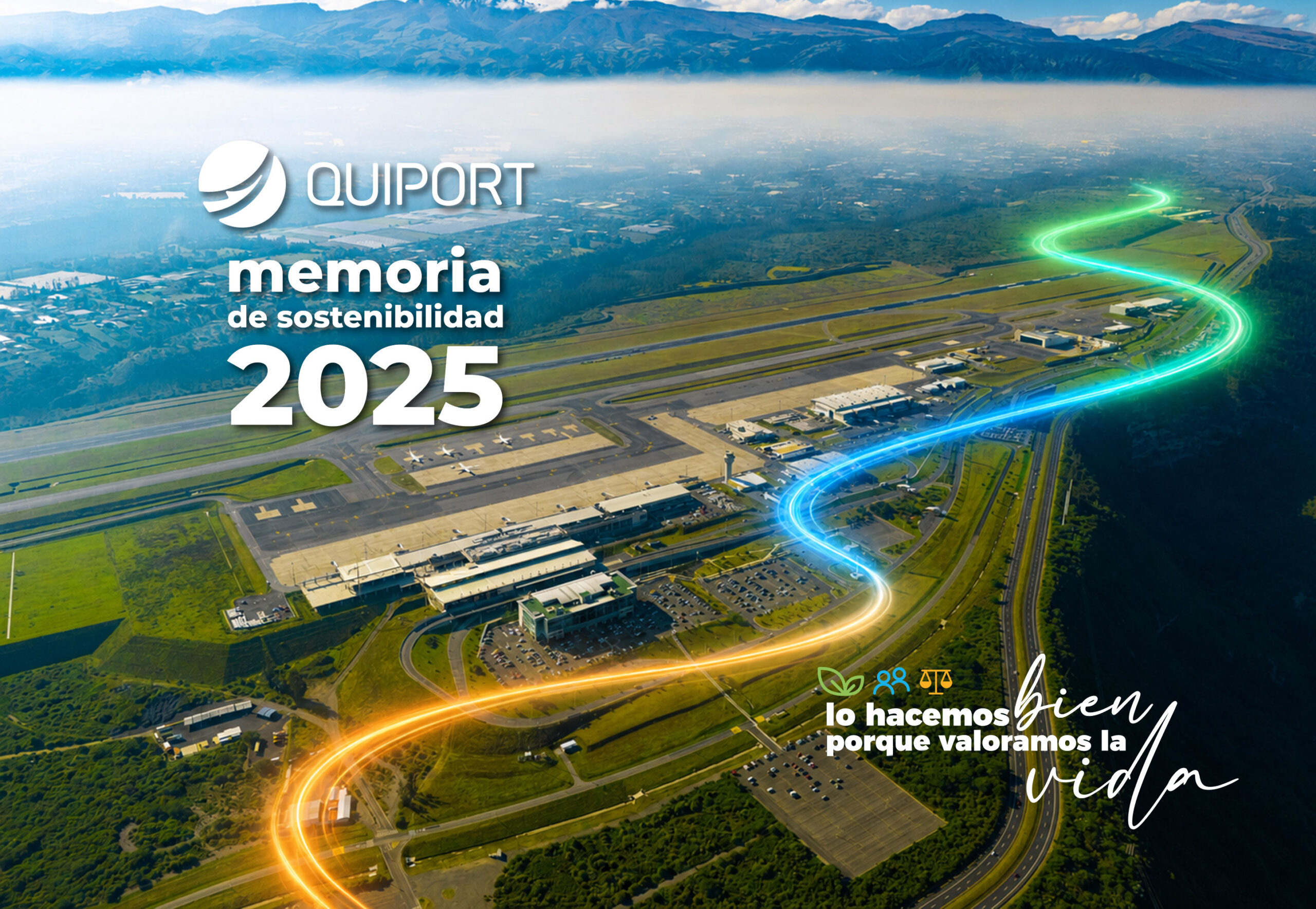
At Mariscal Sucre Airport, sustainability is built long before a plane takes off.
It begins with infrastructure planning, continues with safe and efficient operations, and is reflected in the responsible use of resources, the passenger experience, the well-being of employees, the commitment to neighboring communities, and respect for the environment surrounding the airport.
With this vision, Corporación Quiport presents its 2025 Sustainability Report, a document that compiles the main environmental, social, and governance achievements in the management of Mariscal Sucre International Airport.
“At Quiport, we understand that sustainability is not an additional chapter in our management, but rather the way we conceive and develop every activity,” says Ramón Miró, President and CEO of Quiport.
The report shows how that vision translates into concrete decisions, processes, infrastructure, and results.
Growing Responsibly
During 2025, Mariscal Sucre International Airport handled nearly 5.4 million passengers and 402,832 metric tons of cargo, solidifying its role as a key platform for connectivity, tourism, foreign trade, and Ecuador’s development.
One of the year’s most important milestones was the completion of the Quito airport expansion, a project that added 17,647 m² to the passenger terminal and 35,000 m² to the apron, with an investment of US$74.2 million, financed with Quiport’s own resources.
This expansion increased the airport’s processing capacity from 5 to more than 7 million passengers annually.
But growth also means doing so responsibly. The new infrastructure obtained EDGE Advanced international certification, becoming the first airport project in Ecuador to achieve this sustainable construction standard.
An operation that makes better use of its resources
Environmental management is one of the central pillars of the report. By 2025, 100% of the usable organic material received from the airport’s main commercial operators was transformed into compost, biofertilizer, biogas, or other alternative uses.
In addition, Quiport strengthened its recycling, co-processing, and reuse processes as part of a circular economy strategy that seeks to reduce landfill disposal and give new value to resources that can still be used.
Water management also reflects significant progress. The company reported a 49.4% reduction in the water consumption ratio per passenger compared to 2021, thanks to efficiency measures implemented in operations.
Sustainability beyond the terminal
An airport doesn’t end at its departure lounges. It also connects with its surroundings, neighboring communities, and the ecosystems that coexist with its operations.
During 2025, Quiport promoted reforestation, conservation, and wildlife management efforts in the airport’s conservation zone. These initiatives are part of an environmental management plan that seeks to balance airport operations with the care of the natural environment.
In the social sphere, community and shared value programs impacted 70,828 people. Additionally, training initiatives in entrepreneurship, innovation, and digital marketing were strengthened, as well as the reuse of airport materials to improve community facilities.
These results demonstrate an understanding of sustainability as a long-term relationship with the land.
Employees who make operations possible
Behind every result, there are also people.
In 2025, Quiport achieved a 95% job satisfaction rating in the Great Place to Work survey and ranked seventh among the best companies to work for in Ecuador. The company was also recognized as one of the best places to work in Latin America.
Training was another key focus. During the year, Quiport provided more than 51,700 hours of training, strengthening technical, regulatory, leadership, customer experience, safety, diversity, and inclusion capabilities.
One of the most significant milestones was the training of new airport firefighters. More than 500 applicants participated in a rigorous selection process, and the top candidates were subsequently hired by the airport team. Thirty-three percent of the new team is female, a significant step forward in a traditionally male-dominated technical and operational area.
Experience, Safety, and Trust
In airport operations, sustainability also means offering a safe, efficient, accessible, and inclusive experience.
During 2025, the airport renewed its Level 5 Passenger Experience Accreditation, the highest category awarded by ACI. It also joined the international Hidden Disabilities Sunflower program, aimed at improving service for passengers with non-visible disabilities.
In terms of governance, the report states zero monetary penalties, zero cases of corruption, and zero regulatory non-compliance. It also highlights the achievement of three ISO certifications in Environment, Quality, and Occupational Health and Safety, as well as zero serious aviation accidents and incidents during the reporting period.
These achievements were accompanied by 17 national and international awards and recognitions related to sustainability, passenger experience, human resources, corporate reputation, water management, climate action, and biodiversity.
An invitation to learn about the airport’s sustainable management
Quiport’s 2025 Sustainability Report demonstrates that sustainability is not just a declaration: it is a practice that is measured, managed, and transformed into concrete decisions.
Under its corporate purpose, “We do it right because we value life,” Quiport reaffirms its commitment to safe, efficient, transparent, and sustainable operations, focused on generating well-being for people and value for Ecuador.
Read the full 2025 Sustainability Report here: https://quiport.aflip.in/memoriasostenibilidad2025.html
You can also scan the QR code to access the report.

Quiport and the Ecuadorian Red Cross Strengthen Interinstitutional Cooperation
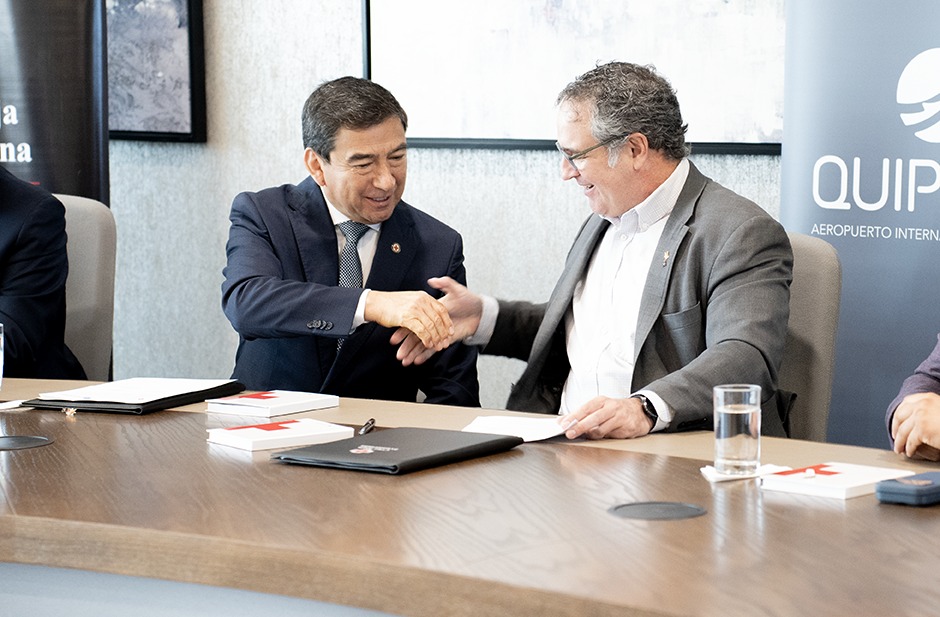
Quiport Corporation and the Ecuadorian Red Cross Society signed a Framework Agreement for Interinstitutional Cooperation with the objective of strengthening joint actions focused on humanitarian support, social management, the promotion of health and well-being, as well as coordinated care in situations requiring a coordinated response.
This agreement will allow for the development of plans, projects, programs, activities, and services of common interest, in accordance with the competencies of each institution. It also contemplates the possibility of coordinating awareness campaigns, humanitarian initiatives, social responsibility activities, training processes, research, events, and other actions that contribute to the well-being of the community.
As part of the agreement, both institutions may provide physical spaces, logistical support, dissemination of joint initiatives, and exchange of non-confidential information, always under prior coordination and in accordance with their internal procedures.
With this alliance, Quiport reaffirms its commitment to inter-institutional cooperation and to promoting actions that generate social value, especially for the benefit of people in vulnerable situations and in contexts of emergency or humanitarian need.
