
Circular Economy and Education: Quiport’s Contribution to the Construction of an Eco-Classroom in Tababela
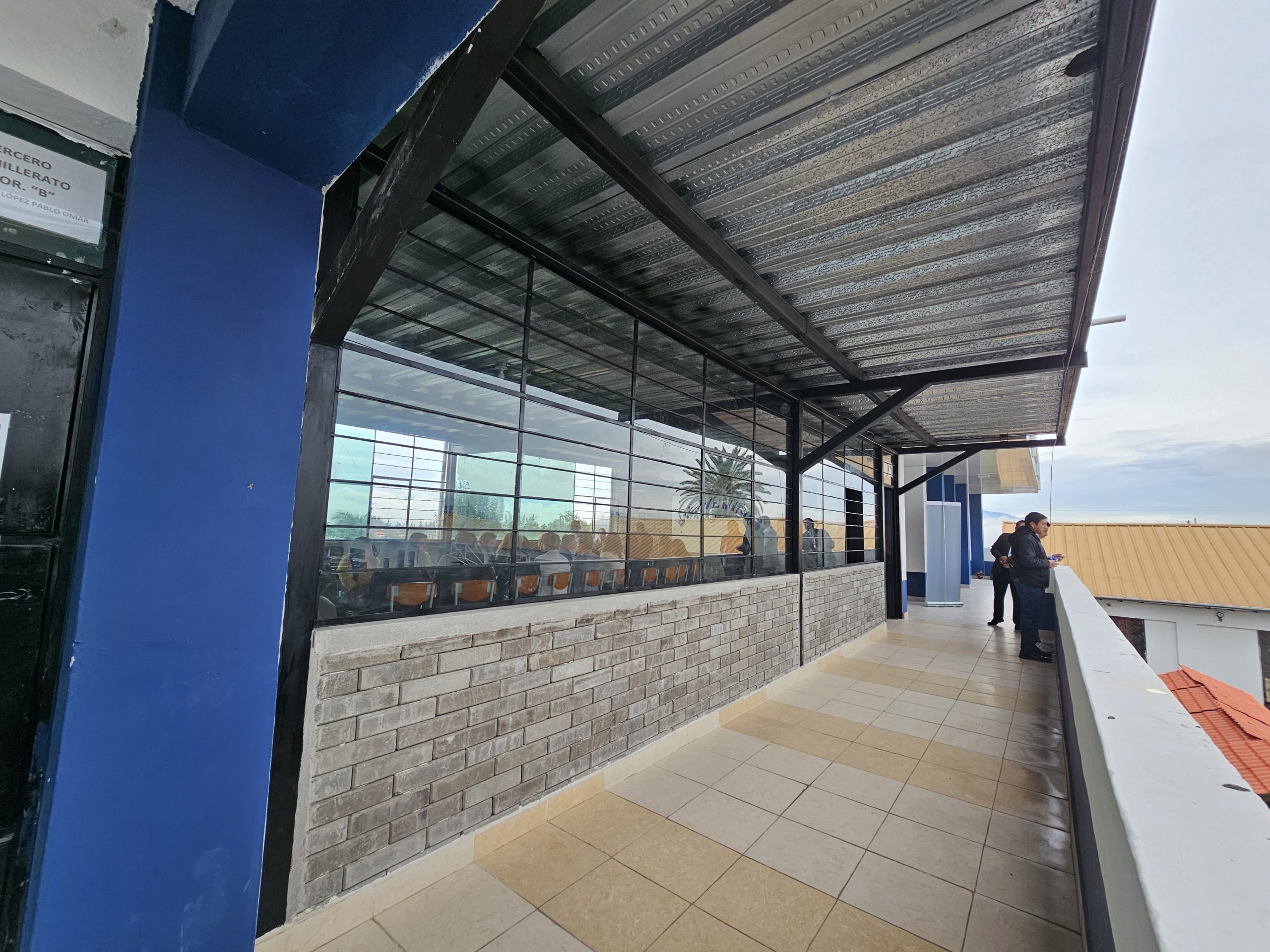
- Quiport’s eco-classroom model, based on the reuse of airport materials and guided by circular economy principles.
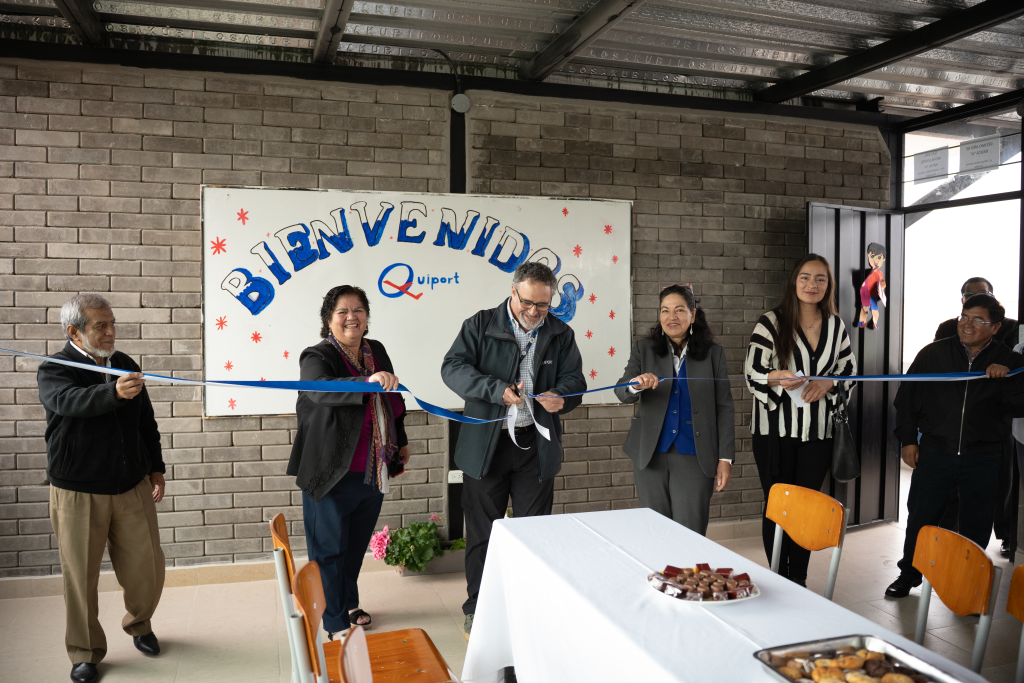
- This is the third eco-classroom developed in surrounding communities, in collaboration with educational institutions and local stakeholders.
The circular economy can become a concrete solution when it connects with the real needs of communities. With this vision, Quiport promotes the concept of eco-classrooms as educational spaces built from reused airport materials, a proposal that has been embraced by educational institutions in its area of influence as a sustainable alternative to strengthen their infrastructure.
Within this framework, Quiport contributed materials and supported the construction process of a new eco-classroom in Tababela, as part of a model that has been gaining traction in communities near the airport.
This third eco-classroom, with an area of 120 m², was developed at the Dr. Arturo Freire School, an institution that adopted this model in response to its educational infrastructure needs, in line with Quiport’s commitment to sustainability, education, and strengthening the community.
A concrete contribution from the circular economy
As part of this support, Quiport donated reused materials in good condition, sourced from various stages of the airport’s operation and modernization, which were incorporated into the construction of the eco-classroom:
2,200 eco-blocks, made from the ash generated by the airport’s incinerator and processed by a certified environmental manager.
Large panes of glass, recovered from the passenger terminal expansion, in optimal condition for reuse.
120 meters of porcelain tile, obtained from the terminal’s floor renovation, carefully removed for reuse. These materials, which in other contexts might have been considered waste, were transformed into a concrete educational solution, demonstrating the potential of the circular economy applied to community infrastructure.
Collaborative work with community impact
The construction of the eco-classroom was made possible through the coordinated efforts of various stakeholders. Quiport volunteers contributed primarily to project planning, the development of the eco-classroom concept, and the coordination of material collection at the airport, while teachers, students, and parents actively participated in implementing the space at the educational institution.
In total, the project represented approximately 1,200 person-hours, reflecting a high level of collective commitment and shared responsibility among the stakeholders involved.
It is estimated that this eco-classroom will benefit more than 1,000 students and members of the educational community, improving the physical conditions for the teaching and learning process and promoting values related to environmental stewardship and the responsible use of resources.
Compartamos Program: Materials Transformed into Solutions
This project is part of the Compartamos Program, through which Quiport has channeled reusable materials to community initiatives with specific objectives for several years. The Tababela eco-classroom is the third project developed under this approach, following those implemented at the San Ignacio de Loyola and 3 de Diciembre de Checa schools, both located in communities near the airport.
A Vision of Sustainability with a Territorial Focus
“Promoting the circular economy implies assuming shared responsibility. Through this contribution, we support the educational community in building a solution that integrates environmental stewardship, resource reuse, and social development, and that also allows us to demonstrate to future generations that recycling and the responsible use of resources can become real spaces for learning and growth,” said Ramón Miró, President and CEO of Quiport.