
World Recycling Day: the sustainable actions promoted by Quiport at Quito airport
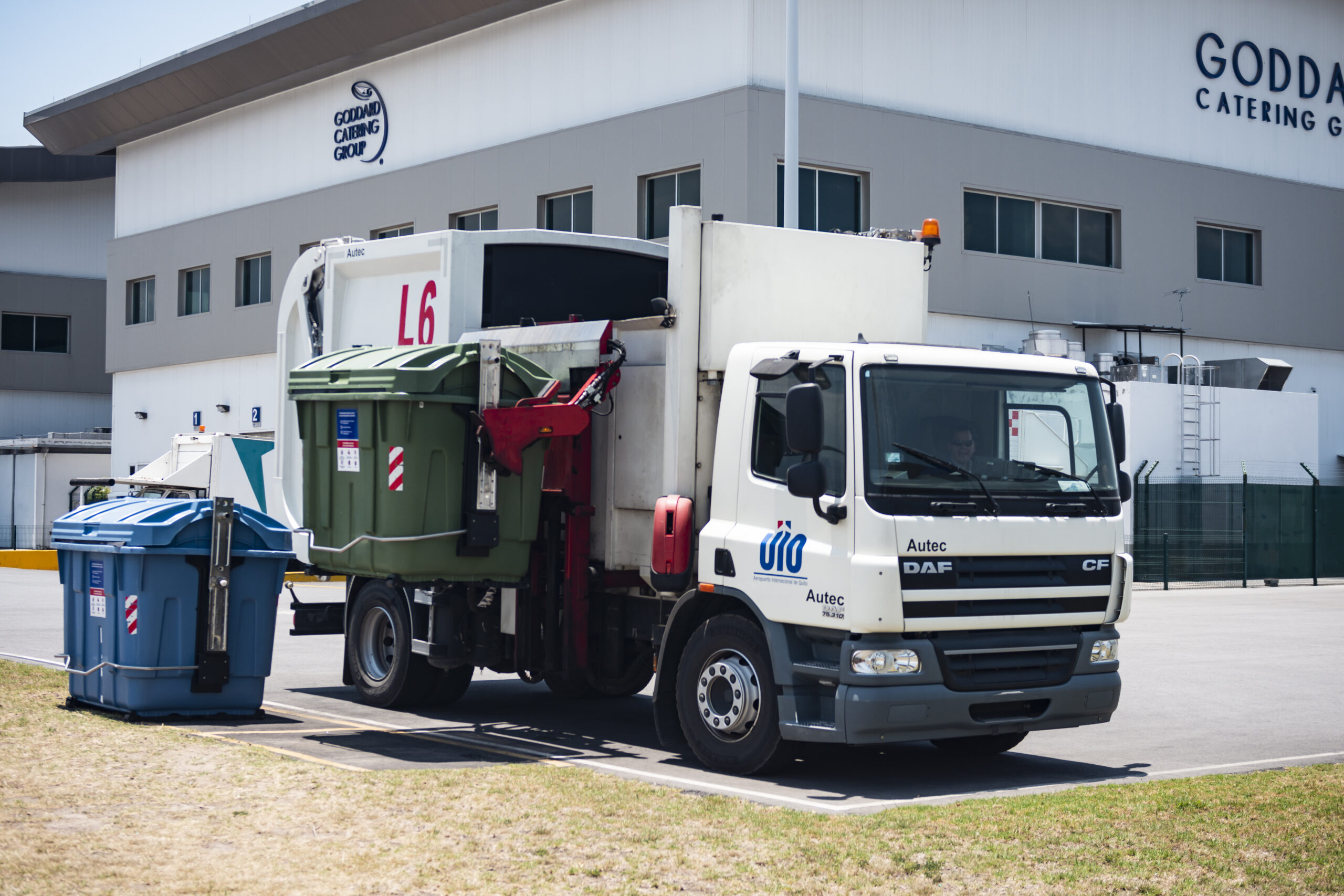
Every day, thousands of people pass through Quito’s Mariscal Sucre International Airport. And while flights take off, passengers arrive, and tons of cargo are moved, another less visible but increasingly important process is also taking place: transforming waste into new opportunities.
On World Recycling Day—a date that also promotes the reduction and reuse of materials as part of more responsible waste management—Quiport Corporation shares several initiatives that have made Quito’s airport a regional leader in sustainability.
A Waste Utilization Model
During 2025, Quiport recovered 428.06 tons of waste through recycling, composting, biodigestion, energy recovery, and recovery processes, strengthening a circular economy model within the airport.
Of that total, 170.39 tons were non-hazardous waste such as cardboard, paper, plastic, and glass, materials that were reintroduced into new production cycles instead of becoming waste.

From Organic Waste to Compost and Other Byproducts
A significant part of this work involves the organic waste generated by various restaurants, shops, and other businesses operating within the terminal.
Currently, the airport utilizes 100% of this waste through solutions implemented on its premises, including 12 composters and 5 biodigesters. These systems transform organic waste into compost and other useful byproducts.
The model also includes the responsible management of hazardous waste, much of which is sent to processes that ensure environmentally sound disposal.
Recycling Can Also Generate Social Impact
Quiport’s sustainability strategy is not limited to recycling alone. The airport has a waste management center operated by a community-based company, an initiative that also creates opportunities for local stakeholders involved in environmental management and the circular economy.
In addition, there is Compartamos, a social responsibility program that integrates several airport companies to give a second life to objects and materials that can still be useful.
Desks, furniture, chairs, tiles, office supplies, construction materials, and kitchen equipment from renovations, refurbishments, or rebranding projects, all in good condition, are donated to schools, community organizations, and public institutions near the airport, many of which lack sufficient resources to improve their facilities.
Even the milled material generated during the airport runway repaving work has been donated to nearby communities, which have used it to improve secondary and tertiary roads, promoting the reuse of materials and generating direct benefits for the community.
From Waste to New Learning Spaces
As part of an initiative promoted by Quiport, schools in communities near the airport have built eco-classrooms using materials from the Compartamos program.
For these projects, Quiport has also donated eco-blocks made in part with ash from the airport’s incinerator.
The initiative promotes the reuse of materials and demonstrates how waste can be transformed into useful solutions for communities and education.
A More Efficient and Sustainable Airport
Quiport’s sustainability strategy also incorporates actions focused on reducing resource consumption within airport operations.
One example is the recent expansion of Mariscal Sucre International Airport, developed under sustainable construction standards and which obtained EDGE certification, an international recognition that evaluates efficiency and sustainability criteria in buildings.
In addition to this expansion, the airport is implementing ongoing measures to optimize water and energy consumption throughout the terminal and administrative offices. These include water-saving and control systems in restrooms, the use of high-efficiency LED lighting, and the rationalization of the air conditioning system, whose operation is adjusted according to the outside temperature and passenger flow in the pre-boarding areas.
A Leading Airport in Sustainability
All these actions are part of a broader environmental strategy that has positioned Quito’s airport as a regional leader in airport sustainability.
In 2024, Mariscal Sucre International Airport became the first airport in Latin America and the Caribbean to achieve Level 4+ Transition certification from the Airport Carbon Accreditation program, an international recognition that supports efforts to reduce emissions and avoid